Here’s some concepts I’m stealing from Delicious in Dungeon for my ongoing megadungeon campaign. It’s not even the food aspect of it, don’t care much about that, but there’s plenty other things that are worth borrowing.
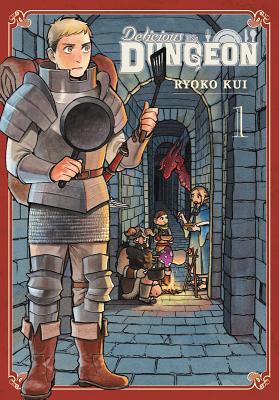
See my highlights of the manga:
- Delicious in Dungeon Book 1
- Delicious in Dungeon Book 2
- Delicious in Dungeon Book 3
- Delicious in Dungeon Book 4
- Delicious in Dungeon Book 5
- Delicious in Dungeon Book 6
- Delicious in Dungeon Book 7
- Delicious in Dungeon Book 8
- Delicious in Dungeon Book 9
(Note that the manga go further than that (14 books) but from book 10 and on it diverges from my main interest/obsession, the dungeon, as the story devolves into a big crisis and final resolution for the last few books.)
In bold is stuff I want forefront in my Gunderholfen campaign.
Dungeons, Demons and Masters
There’s two kind of dungeons in Delicious in Dungeon. Natural dungeons are simply places where magic happens to be strongly concentrated. Unnatural/real dungeons are different and are basically prisons for demons (entities from another world), one demon per dungeon to be more precise. Dungeons of this latter type are huge, sprawling, expanding and sometime changing to fit the need of its Master.
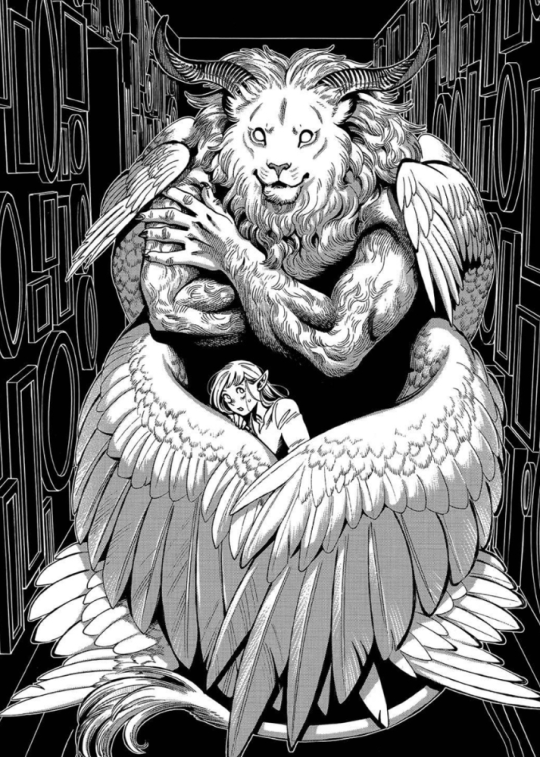
Part demon’s accomplice, part roadblock to its liberty, the Master of the Dungeon is the one who controls the physical object that detains the demon, somewhere in the deeper levels of the dungeon. Probably already powerful, a Master gain extra powers once they take over a Dungeon, like the ability to create monsters, modify the dungeon, and have access to unique spells. This comes at a cost as the demon’s influence slowly erodes the Master’s grasp on reality and leads to madness down the line.
Demons have some limited abilities to interact with interlopers and can try to influence them in some way. Adventurers can also become unwittingly the demon’s liberators if they manage to kill the Master without further precautions.
Aside: a Player Character managing to become a Master most probably become an NPC and a villain for another campaign…
The Deeper you go, the more Magic/Mana there is
Mana is everywhere but there’s a lot more mana inside dungeons than outside. It has two main effects. The first is allowing the presence of monsters as they need ambient mana in order to exist at all, and larger amounts the more powerful they are. Thus, powerful monsters cannot normally venture on the upper levels without seriously comprimising their health. (if you ever needed an explanation for monster placement here you go).
The second effect is on magic-using. Spells are easier to cast and are more efficient inside the dungeon. (and to go further than the manga on this particular point>>) The deeper you go the truer it becomes. This also means that more powerful magic can only be cast on deeper levels (or a special place like a wizard’s tower perhaps) and isn’t purely in proportion to it’s caster’s might/high level. (If you follow my meaning, this implies a system that is probably NOT D&D).
The all-important, well-rounded Magic-User
Magic-users are absolutely essential to a party of adventurers to the point where not having one would be a serious issue. Potions, scrolls and other one-shot items are non-existent, you MUST rely on the magic-user for utility spells (water-walking comes to mind), protection spells, sheer firepower and most of all, healing (resurrection even). It’s a world without clerics where mages can cast fireballs AND heal (but some are better at one or the other). Protecting the party’s magic-user is not to be taken lightly. This implies that magic-users are polyvalent, have large ressources (are not depleted that quickly, have also an additional reserve with their mana-staff) but must manage them as there’s nothing else to fall back to.
Know your Monsters: Dungeon Ecology
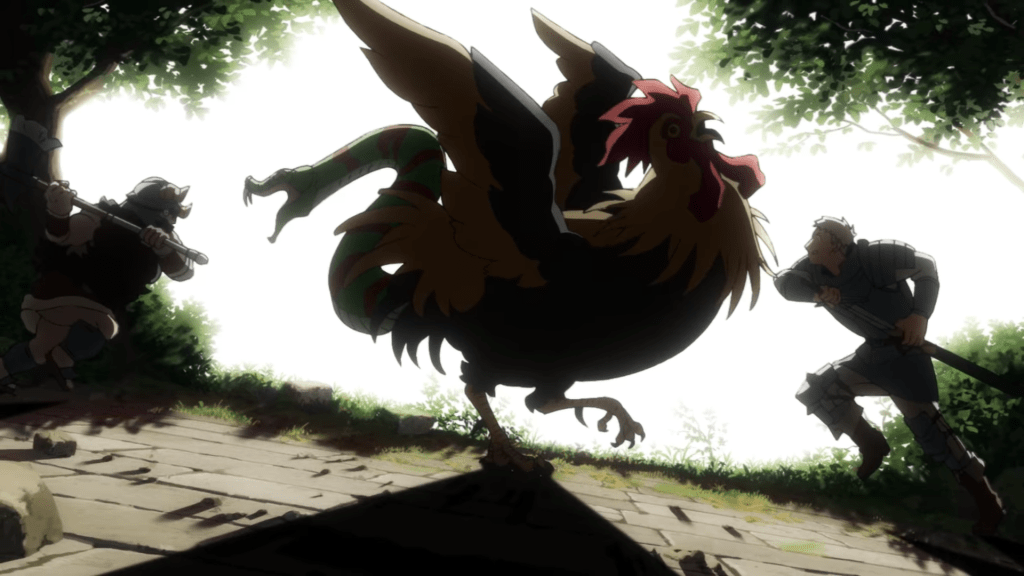
Monsters, except the very weakest, should always pose a threat if you don’t know much about them. You have to have knowledge of their abilities, weaknesses, favored tactics, etc. if you wish to reliably be victorious in encounters with monsters. Theoritical knowledge (from a book say) is fine but isn’t always reliable. Hard gained practical knowledge is best of course but isn’t widely shared and often kept to one’s group to have an edge over others.
Adventurers Guilds
Adventurers work in guilds (the same as a party), with each members having signed contracts (with terms that could differ from one another). The guild’s leader owns the party’s equipment in its entirety (weapons and armors included). He’s the one who buys provisions and equipment for everybody each delve. The guild members can leave the guild if they wish so as long their contracts allows it.
Fatigue and Resting
The food aspect of Delicious in Dungeon (i.e eat properly in your dungeon-delving or suffer dire consequences) is interesting but hard to put in place in a ttrpg I think. A more general approach that includes stamina/fatigue that player characters have to take into account is something I wish to put more emphasis on (resting as something more that regaining hit points or abilities) in my campaign.
Conclusion
The fluff about the Dungeon/Master/Demon isn’t that important to be honest, though it fits with the module I’m actually running (Gunderholfen). What I find much more interesting is to play, to adapt (as the dungeon master) with:
- how magic is applied in this setting, changed by how deep you are in the dungeon
- player characters doing a rest as something more significant than in classical D&D
- and also, and this gives me some work to do, how many monsters should be puzzles to solve for the players (they have to learn how to fight them efficiently).
 Streets & Spores
I’m intrigued by the possibilities of amplifying magic with depth in the dungeon, correlated with more dangerous monsters. Just spitballing here, but I can imagine a handful of avenues you could explore:
Magic grows stronger with depth, but it requires skill and practice (gaining levels or other abilities?) to use that growing power safely and effectively. Attempting to cast spells beyond your skill threshold could backfire terribly.
All PCs in the dungeon gain some access to magic, but lack of training makes this riskier. Still, if the situation is dire, maybe it’s worth trying?
Magic items only gain their true abilities when carried deep and bathed in the magical depths. Charged, consecrated. Maybe their potential is not fixed, but evolves as the PCs explore.
Regions of the dungeon are suffused with magic of a specific type, granting corresponding advantages. Could be tied to schools of magic, or the elements, or anything, really. This could also connect to the puzzle nature of monsters, who would certainly reflect the magical ecology of the place.
Instead of monsters as a food source, use their bits of anatomy to fuel magic. Material components to offset the cost or risk of casting.
I’ll be very curious to see what you come up with!
J’aimeAimé par 1 personne
Wonderful suggestions all of them!
« Magic grows stronger with depth, but… »
Maybe you’ll find my answer will be a bit lackluster but I’m working with the Dragonbane system and in it spells are separated in ranks (must know rank 1 in order to learn rank 2 and so on). The whole magic system in Dragonbane is, frankly, a bit awkward but I’ll be using it to my advantage in this particular campaign.
« All PCs in the dungeon gain some access… »
As is, all PCs can learn rank 1 spells, if someone teach them. If they don’t have prior formal training their efficiency in casting will be low (can misfire) until they get the hang of it (invest xps in it).
« Magic items only gain their true abilities… »
Amazing idea, I’ll borrow it in its entirety!
« Regions of the dungeon are suffused… »
That’s worth thinking about for sure.
« Instead of monsters as a food source… »
Interesting but I don’t think I’d go that way. Or for the moment at least, I see monsters as purely tactical challenges.
Have a great weekend Brian!
J’aimeAimé par 1 personne