After six sessions in the campaign we’ve reached a critical landmark as the Infractions Rating is high enough now (6 as stated in the book) to warrant a Malévol Intervention against the adventurers.
That means they‘ll try to fend them off actively. That’ll be most interesting. Officially, also as stated in the book, it means as a first step to launch a combination of 1d3+1 encounters against the adventurers. That could be pretty brutal and things will then surely escalate…
But wait, who’s they? Who are the « influential family members » the books talk about in this instance? They’re not specifically named. Of course we can infer who they are from their description (and their stats in some instance) in the Rogues’ Gallery and ultimately, as always, it’s up to the dungeon master to decide which one of the Malévols are the leaders. But that whole process highlight a gap in Castle Xyntillan’s design (in an otherwise great product), as central as they are to the module the Malévol family members aren’t well fleshed out and furthermore, we know next to nothing of their relations to each other. I’ve seen the author argue it was a deliberate choice to keep it simple, and I can see the argument for it. But… Well, I’ve cut my teeth (bad pun) on Vampire: the masquerade/dark ages when I was a teenager and was writing characters relationships charts all the time! The difficulty is that there’s 50+ Malévols but it seems obvious to me that not every one of them should be treated equally.
With that in mind I aim to share my own classification of the Malévols next week but for the moment I’ve gone on a bit of a tangent…
Malévols, Rumps and Ambers oh my!
(Gabor Lux, feel free to write to me if I get anything wrong)
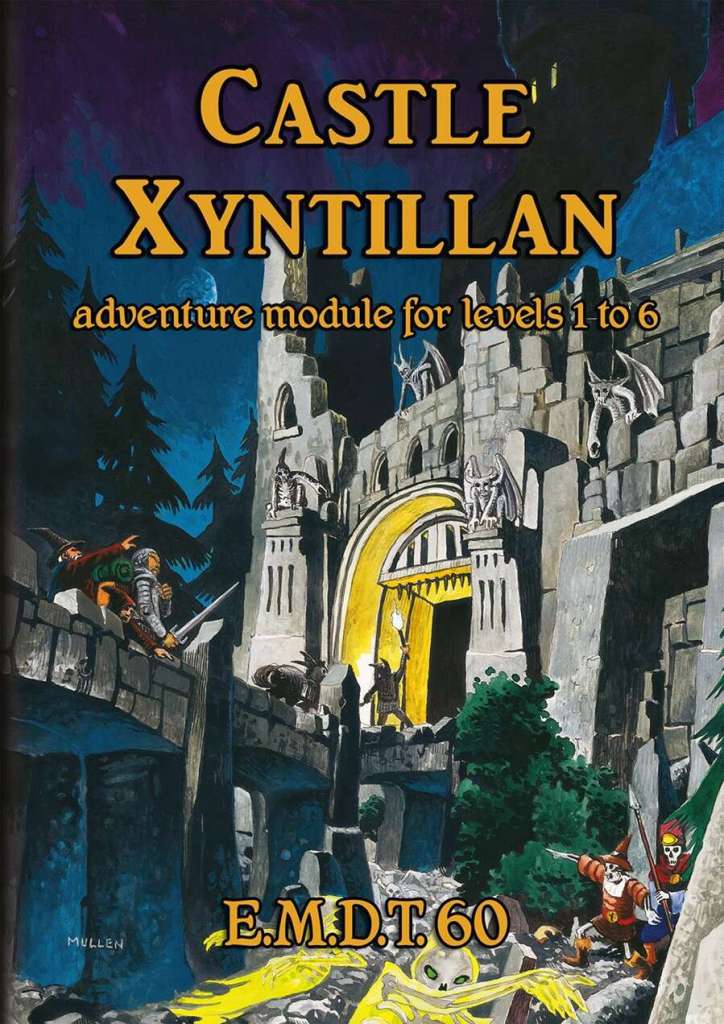
Castle Xyntillan was originally written as to be a revamped Tegel Manor. The project was sidelined and many years later, and much playtesting (and characters deaths), it became its own thing. I would describe it as a generous serving of Tegel Manor, accompanied by a portion of Castle Amber and spiced up with folklore tales.
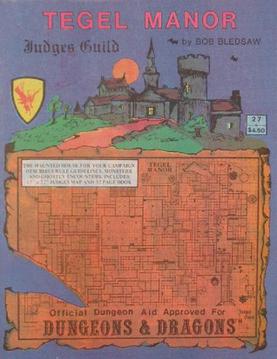
Both Tegel Manor and Castle Amber are funhouse modules and each feature an extensive family of crazy people at its heart. Tegel Manor has the Rump family, 13 generations of them (with only 3 members alive, in bright red below).

We see CX’s roots in Tegel Manor’s map (as a chassis), use of family « living portraits » (no its not from Harry Potter, haha) and its terse room descriptions. There’s also a similar thing going on with the few living relatives amongst a mostly dead/undead family if we squint a little. I have to mention an interesting twist in TM as the evil Rumps want the lone « good » (he’s not a paragon of virtue by any means) Rump dead in order to complete their ritual!

With Castle Amber we have the d’Ambervile family (shortened to Amber). The Ambers are definitely cursed folks but (most) aren’t undead per se. They’re all very blasé and each have their own brand of wicked hobby to pass time (i.e sponsor of bareknuckle matches!). Also, of particular interest here is its treatment of the Amber family members as random encounters. We can readily see that CX has taken quite a few elements from this ole module too (i.e the indoor forest).
Aside: CX borrows a character (Madeline) from CA which itself had borrowed it from Poe’s The Fall of House Usher.
Aside 2: CA borrows Clark Ashton Smith’s Averoigne characters and, contrary to the stories, lump them in the same time period, something that I myself will definitely do!
An easy take then is to see Castle Xyntillan as a mix of its two predecessors with of course new inputs from its author’s own ideas. The same goes with its own brand of cursed family; the Malévols are mostly undead and portrait-linked like in TM, but also I think in a way more along CA’s whimsical fantasy. Where CX diverges from the two is with its inclusion of folklore material (i.e The Beast as in the beauty and the beast).
Upcoming: classification of the Malévols
 Streets & Spores