That’s a fancy title innit? Gigaxian naturalism refers to a concept developed into this article by James M at Grognardia, something of a fundamental OSR blog post in my opinion. It has to do with the idea that D&D founder Gary Gigax was getting out of his way to include such mundane, unglamorous things like latrines, food storing, detritus piles and also, more generally, the idea that monsters weren’t only waiting for adventurers to come by (and that they had babies) and so on in his dungeon-crafting and world-building methodology, and for the explicit purpose to get closer to some kind of realism in his game.
Now, I’m writing this mostly as a thought experiment & for the fun of it, I wouldn’t myself feel the need to implement most of this in my game. But the experiment is to try to add some biological/ecological layers on top of standard gigaxian naturalism and see how it could possibly be used for an elf game, specifically in a megadungeon environement.
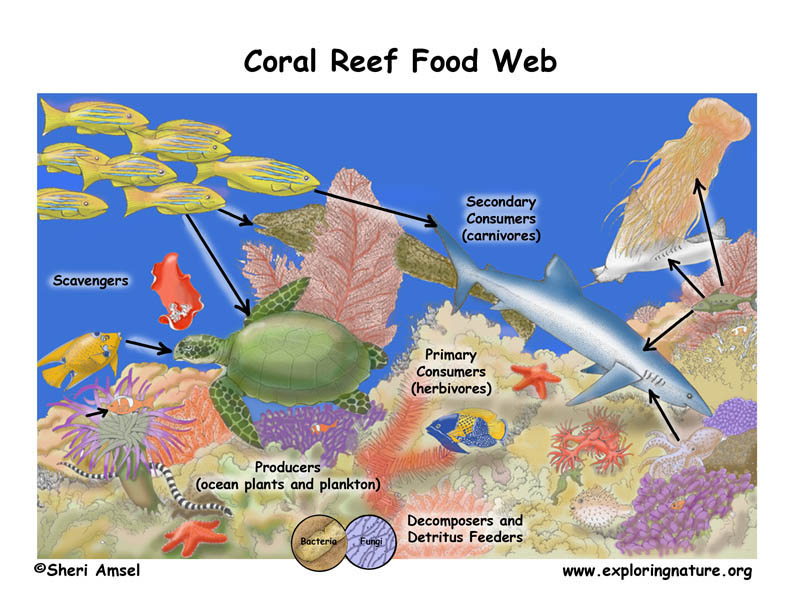
Food Web
Do monsters need to eat? In this approach they do.
Life is all about energy and energy transfer. Autotrophs manage to get energy more or less autonomously, transforming light or chemicals around them for their needs. Decomposers and scavengers eat dead stuff. Heterotrophs eat other creatures and unless, it’s at the top of the food chain, a creature in the dungeon is probably prey to something else.
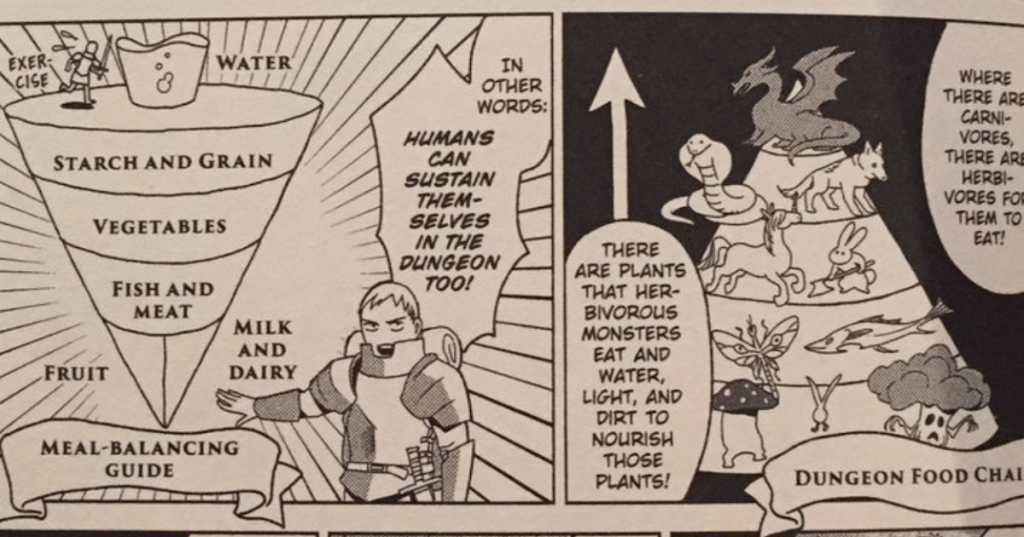
If we’re a bit serious about it, it would seem important to determine what’s the trophic base of the dungeon or in other words, what are the first things (that produces energy) to get eaten. A classic I’ve seen in many rpgs is some form of mushrooms. Which is fine, it’s a classic for a reason even if I once argued that it’s a bit unnecessary to have mushroom and mushroom-creatures limited only to the underdark in D&D. The truth is that a dungeon-environment would be a rather poor ecosystem. However, we’re doing fantasy over here and let’s handwave some of the real world in order to create something new.
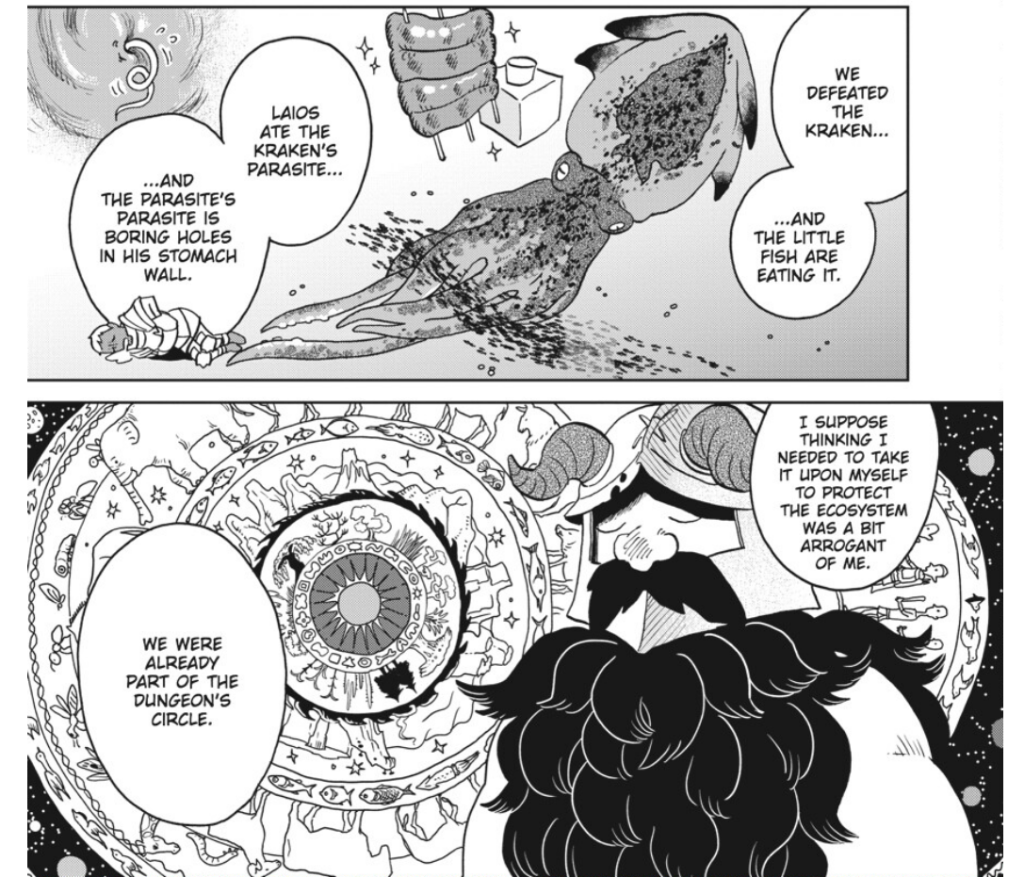
One could imagine carpets of bioluminescent microorganisms « grazed » by small oozes that are in turn eaten (siphoned?) by stirges, that are eaten by fire bats, that are killed by harpies because they compete for the same ecological niche…
Stable or Disturbed Ecosystem
Most probably, the player characters will first enter a (mega) dungeon and find it as a somewhat stable ecosystem wherein groups of non-sentient creatures as well as factions of sentient ones have more or less defined territories for themselves. These territories can vary, overlap – there can be encroachment or raiding across certainly, but there’s still some kind of equilibrium in place.
There can even be some active agents or driving force that ensure that this equilibrium stays in place. A good example is the sun-scarred knights in Richard Barton’s Arden Vul, a neutral faction that has ambassadors in other factions and (seemingly) strive to keep the balance.
So, stable ecosystem at first but…
Player Characters acting as a Wildfire
PCs are not part of this dungeon ecosystem – they intrude, they bring chaos, they lit the powderkeg or, in keeping with the natural theme, they’re like wildfire. After them, or with enough delves anyway, it’s tabula rasa. But nature abhors vacuum, aka. the Game Master re stock the dungeon. Not with the same creatures that just got obliterated obviously. With something opportunistic that benefits from the demise of the previous inhabitants.
More half-baked ideas:
- Manatrophs, the trophic base thrives on magic that suffuses the dungeon. Anti-magic zones, devoid of magic, would also be mostly devoid of life: dead zones.
- Ruderal Species: or pioneer species, what are the most likely creatures to find a dungeon that is empty for some reason?Probably goblins, easy choice. And like real-world ruderal species, they’ll have a hard time once more dominant species come along.
- Dungeon as a vivarium. A twist on « the wizard did it » trope. The dungeon is not the place where the archmage experiment his magic, it is the experiment.
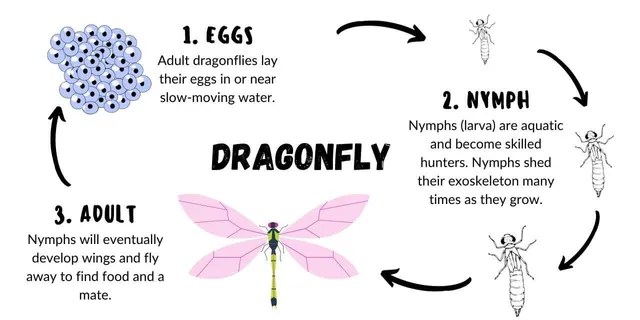
- Monsters that goes through metamorphosis. What if an ankheg had a larva phase? Or IS the larva?