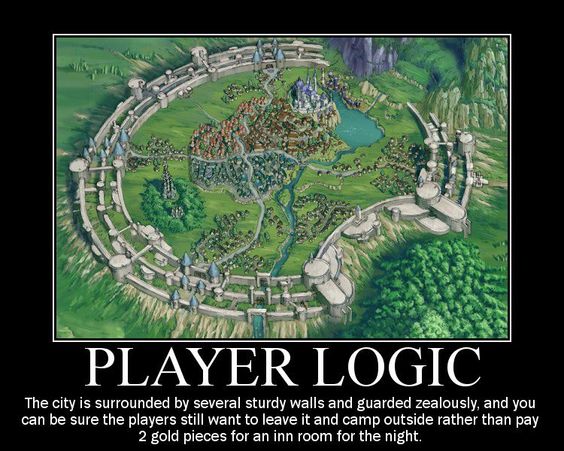
Resting/camping in rpgs

A few years ago, in my D&D 5E campaign in the jungles of Chult, my players fought a Tyrannosaurus Rex. Awesome? Heck no, twas a real snoozefest of a fight. A bit predictable in fact, dinosaurs are pretty bland in D&D, the T-Rex has one bite attack and a tail attack (how does a tail attack makes any sense I wonder) and that’s it – but that’s not really what I want to talk about. One character, Rufb the barbarian, was pretty messed up by the fight, the T-Rex bite attack does hit very hard obviously, and he lost probably more than half his hit points, even with his damage resistance. No worries, one long rest later and he was as fresh as ever – full hps, all his abilities back, etc. And that was with the so-called Gritty option on mind you. He healed, naturally healed – no magic, not even bandages involved, from wounds by a T-Rex bite frikkin overnight

Now, we know that D&D 5E has definitely a super-heroic style, characters are pretty much like in video games and, yeah, there’s absolutely no sense of verisimilitude.

On the other hand, in many old-school systems for the same long rest all you get is 1 hp (unless you’re a magic-user and much more importantly also get all your spells back!). That’s more realistic for sure, healing takes time, and more in tune with a game of resources management.

But in my opinion also lacking in some way?

I mean, it’s a bit annoying, it goes against what I said about 5E, but I think that the best example of an interesting resting mechanics I can come up with is also found within video games rather than a supposedly more flexible tabletop rpg.

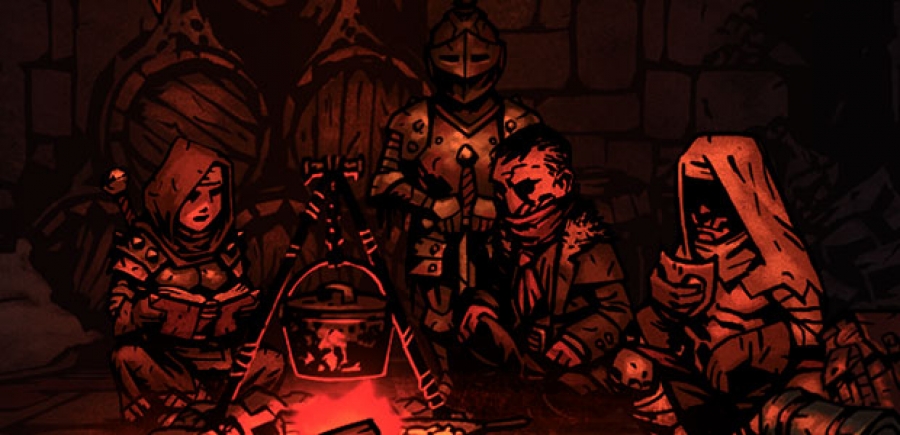
In Darkest Dungeon, in medium and large expeditions you’ll most likely camp along the way. You then spend a bundle of wood and some food to get back some hit points and, more interestingly, also spend from a limited pool to activate camping skills.

Three skills are accessible to every characters, anyone can do an Encourage, a Wound Care or a Pep Talk to help another character.

Every other skills are character-specific. Be it the Anger Management of the Abomination, the Restring Crossbow of the Arbalester, the Zealous Speech of the Crusader, they all are coherent rp-wise and flavorful For example, if the highwayman’s camping skills are about giving fighting bonuses to himself only, the Vestal’s are all about helping others.

A personnal favorite of mine is the Grave Robber’s Gallows Humor which has, for all companions. 75% chance to decrease stress by 20 (that’s good) and 25% chance of increasing it by 10. The Grave Robber herself has an automatic -25 stress. Dark humor is hit or miss, it is well known. A somewhat similar skill is the Jester’s Mockery which decreases stress for everyone at the expense of one companion, the butt of the joke the poor lad.

Now, many of those camping skill gives temporary buffs and that is something that can be portable to ttrpgs if one wishes so. Get your whetstone out of your backpack and sharpen your sword or encourage a low morale henchmen – could be included in any system I think. On the other hand, the examples from Darkest Dungeon mostly work on the premise of the specifi Stress parameter. I guess you must have some resource other than hit points, if not stress then something else in order for it to work. I know that I could borrow some things and implement it into Dragonbane for example because it got a willpower pool and conditions to fiddle with.

Edit: It seems like Tales of the Valiant, a 5E derivative system from Kobold press, has some interesting resting (or resting-adjacent) mechanics involved. Here’s a play report from blogger Blacksteel who uses it to good effect: https://towerofzenopus.blogspot.com/2025/10/valiant-swords-of-greyhawk-session-14.html I still wouldn’t run something similar to 5E but it’s interesting nonetheless.

Edit: Here’s someone who did a real attempt at it as opposed to my halfassed commentary above: A Camping Procedure by Rise Up Comus :https://riseupcomus.blogspot.com/2025/10/a-camping-procedure.html

A note on Parasites

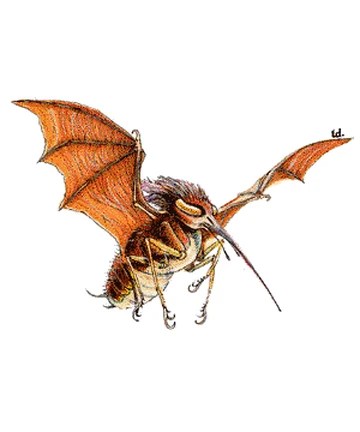
So that’s a bit random but I was thinking about resting/camping in D&D and then how STIRGES should preferably feed on sleeping targets and act more like their real-world counterpart, the vampire bat. And yeah, we might say I got down the rabbit hole…

Am I a bat or am I a mosquito?

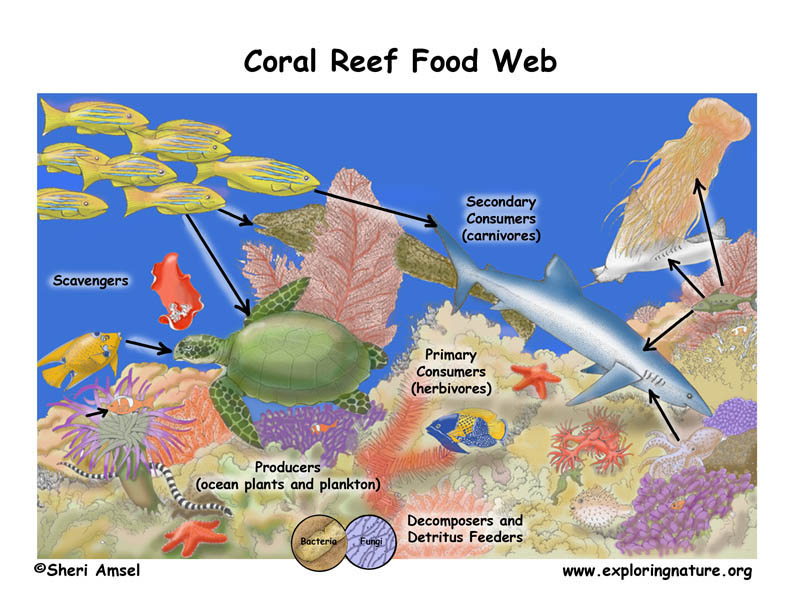
The sanguivore stirge should not be seen as predator but in fact as a parasite (it doesn’t wish to eat you, just to steal some of your blood, that’s parasitic in nature). Sometimes the boundary between the two gets blurry, for example many species of leeches in the real world are often both – stealing blood from animals and also swallowing micro-organisms.

I’ll not go into truly gruesome territory over here (there’s plenty of it when we talk about parasites) but suffice to say, I think including parasitic behavior within your fantasy ecology can definitely add some kind of unforgiving nature ambiance.

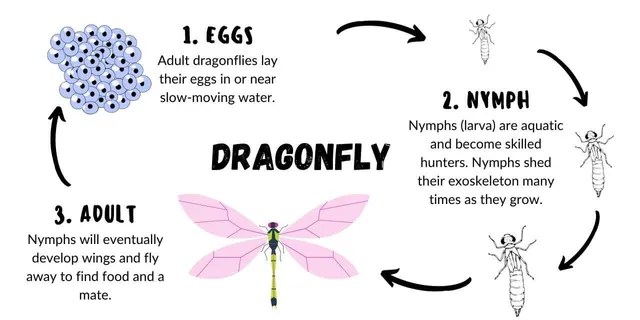
In my own game, in my Jungles of Chult campaign, I had giant parasitoid wasps (the mounts of wasp-riding goblins) that laid their eggs inside giant spiders and also fed on the spider-like sentient Araneas. The Araneas turned to the adventurers for help against this threat in exchange for precious spider silk vestments.

For you see, I’m a big fan of Gyagaxian Naturalism in my ttrpgs.

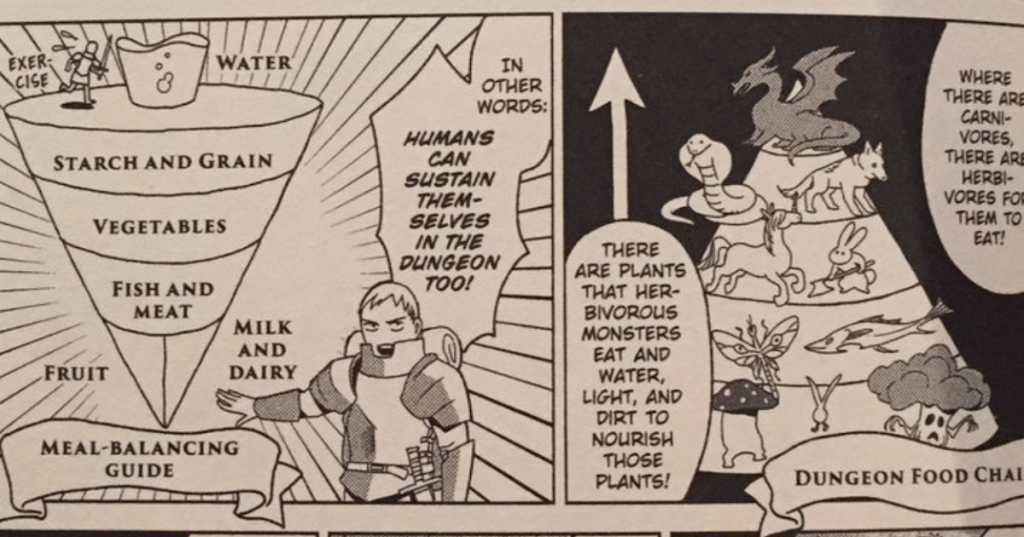
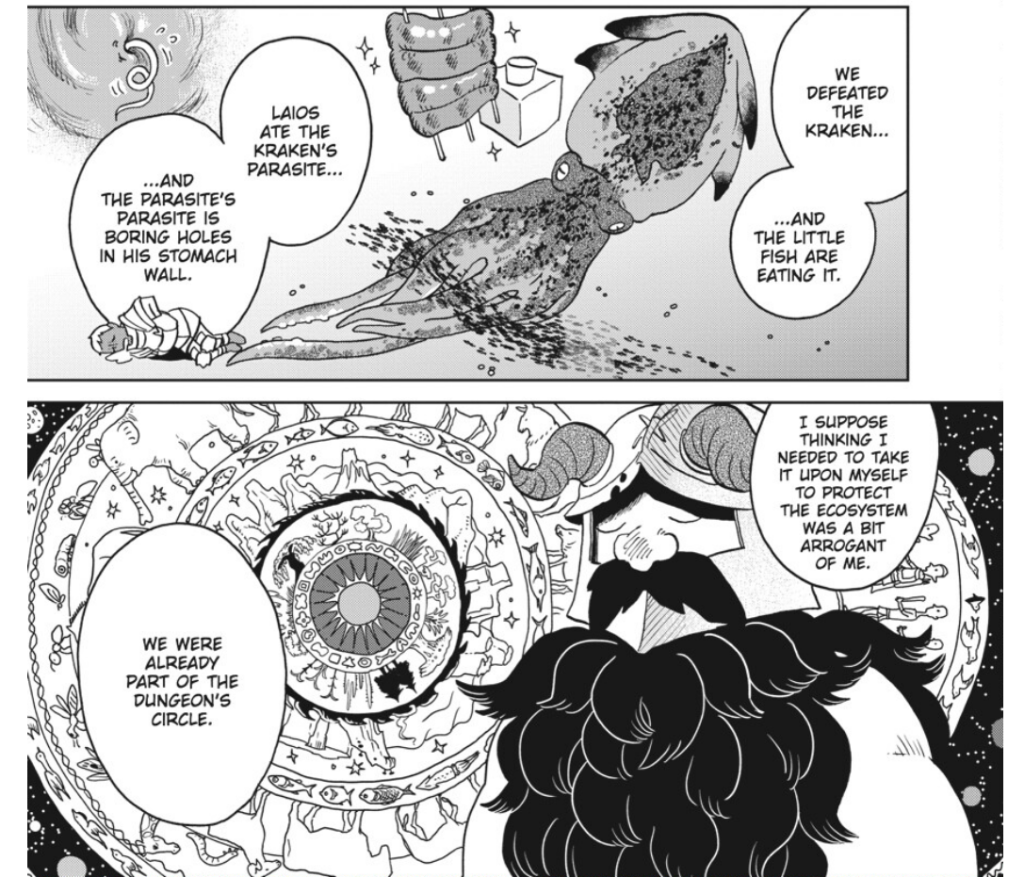
Ryoko Kui’s Dungeon Meshi.

And here’s an entertaining video from Unnatural History Channel, highly recommend this channel if you’re into that kind of stuff:

Riesending Cave, the Real Undermountain

Here’s one of the most fascinating thing I’ve ever watched. Seriously. The top-notch production value and absolutely great soundtrack of this documentary makes it a unique experience. I don’t know much about speleology or spelunking but there’s something so strange, so visceral to these underground environments…

The Entrance at the top of Unterberg Mountain:

Sites translation:

  • Ursprungcanyon = Origin Canyon
  • Hochsammler = High Collector
  • Sammler = Collector
  • Lange Gerade = Long Straight
  • Sechs Schächte = Six Shafts
  • Auenland = Shire

The Sleeping Emperor’s legend:

I would be remiss not to mention that (like so many caves) there’s a legend attached to Riesending, of course! The Sleeping Emperor, sometimes Charlemagne, others Barbarossa. with their retinue of dwarves (Untersberger Mandln). When the Emperor will finally awakens, this will signal the end of the world as he’ll lead his army for one final great battle (presumably for the good guys but this is debatable imho).

Takeaways:

  • An arduous trek to reach the entrance and then days or even weeks of underground exploration, or logistical concerns cranked to 11
  • Semi-permanent bivouacs placed at safe (relatively) spots that need to be replenished regularly
  • The hugeness of the place would translate into a mix of point-crawling and proper dungeon-crawling into the megadungeon
  • The Underground Lake! (1:00:45)
  • The Really-Uncomfortable-You-Cross-it-Riding-Bridge! (58:25)
  • The Sleeping Emperor!

Playing an archeologist in D&D?

In the Tomb of Annihilation adventure you have to find an ancient ruined city somewhere in the middle of the jungle, enter its dungeon, destroy an evil artifact and defeat the evil lich. All very principled. And you can play as an archeologist (or an anthopologist).

Kind of.

You’re still gonna play a fighter, a wizard, a bard or whatnot, but you can choose the aforementionned disciplines as « backgrounds ».

Apart from the fluff, an archeologist has the following ability:

Historical Knowledge

When you enter a ruin or dungeon, you can correctly ascertain its original purpose and determine its builders, whether those were dwarves, elves, humans, yuan-ti, or some other known race. In addition, you can determine the monetary value of art objects more than a century old.

That’s nice, I guess.

But… It’s a bit weird really. Well, first, obviously there’s a major difference with using archeology knowledge for a dungeon master to help with verisimilitude and a player who plays an archeologist…

If there is an archeologist character, it implies the discipline of archeology in-world. Tomb-robbing is often a central thing in D&D (as it is in my campaign), but that’s pretty much the antithesis of archeology, which can be described, I think, as a systematic method centered around a scientific basis for the purpose of finding and studying ancient artefacts.

Sooo…

It is true that the players can be somewhat methodic – in killing and looting everything!

It’s the scientific part that’s a hard pill to swallow for me. You see, archeology did not exist before the 18th century. Indeed, to see the emergence of archeology first you had to have a couple of things in place: scientific theory, a surging interest for things of the past of course, and, let’s not forget, an era of colonialism

Of course, you can do what you want with your elfgame, but for an obsessive-compulsive like me, who wants things to make some kind of sense (as much as a silly game as D&D allows), something that is so steeped in a very modern background that implies modern knowledge and modern infrastructure (universities and museums and so on) is off-putting.

With all of that in mind you could have an archeologist character, but I think you would need either just simply disregard all of the above (the de facto solution) or you could craft a campaign that fits this kind of premise and in that case, it would be very far from the usual vanilla fantasy… But maybe not uninteresting.

Archeologist Treasure Hunter

Or you could just dump the whole thing (with its anachronism and ethical problems) and just refluff the archeologist background as a Treasure Hunter… I mean, it’s a fantasy trope for a reason.

Choose a Sponsor for your Dungeon Delve

A neat idea from the gamebook Battlepits of Krarth (Dave Morris, Oliver Johnson) is to make you start the adventure while choosing a sponsor as the first obligatory step before entering said battlepits. In pure gamebook fashion you can choose blindly and then of course you risk getting a bad one (one sponsor is actually a vampire who, guess what, is more interested in getting your blood than having champions to compete), or, you know, you could try to get some information first and make a better choice…

Those are « Sponsors » too but they’re a bit, huh, different?

Of course, a Choose Your Own Adventure has a limited scope and so there’s only three sponsors to choose from (others are mentionned but aren’t availaible). One good, one bad and one really bad (the aforementionned vampire). An interesting twist is that the good one, Magus Balthazar, is harder to get, he’s actually picky as to whom he chooses. It’s not like he wants the first boneheads to cross his door to represent him in this prestigious, yearly competion. No, no, no. You will be tested, and if your intelligence is found lacking, well… You’ll have to find another sponsor.

This asshole doesn’t care one bit if you die horribly…

With a Tabletop RPG, of course, you could have a lot more options to choose from, leading to interesting roleplaying opportunities.

But what’s the point of having a sponsor? Well, suppose you get one that’s interested in your prolonged well-being, a sponsor could ensure that your chances of success are a bit better, providing you with starting funds, equipment, henchmen and so on… And, depending on the style of play, maybe a kind of insurance against setbacks (healing services, or even resurrection).

In any case, there would have to be something to gain for the sponsor too. A share of the profits, first bid on precious stuff, etc. In a TTRPG, a sponsor wouldn’t be a simple employer, there’s a long-term relationship (or debt serving) to consider.

If I ever do something like a megadungeon campaign, you can be sure there’ll be sponsors around!

Undermountain: Lonely Vampyre

With my previous post you could think I don’t like The Ruins of Undermountain but that’s not the case, there’s a lot of clever stuff in its pages.

One location/encounter in particular reminded me how much I like unlikely allies as a DM. I’m not talking about factions (which are nice too) but monsters or seemingly evil characters that, under certain circumstances, can bond with the PCs. I like it but I also know from experience that Players are absolutely thrilled by it!

But here’s the one I’m talking about here (1991’s spoiler I guess):

This vampyre was once a female human merchant of Waterdeep, Spadreera Omarkhont. She now appears as a slim, svelte, beautiful (but dirty) creature clad only in ash-covered tatters, her eyes glittering with red fire and much of her hair all burnt away.

Yeah, she’s a fire vampire.

Spadreera is lonely, more than anything else. She’d like to chat and gossip about Waterdeep regularly, with someone she could regard as a friend and will try to befriend any beings who survive her initial attack, and cease hostilities when she offers to. PCs who befriend Spadreera never need fear attack from her again. She will not accompany PCs out of the dungeon, and is reluctant even to leave her lair but she will meet PCs at agreed-upon places elsewhere on this level, and even aid them against encountered monsters. She does not appreciate being used, however PCs would be wise not to try to dupe her into fighting every other monster on this level. Spadreera will plead to any befriended creatures for visits as often as possible! In return, she can guard treasure for PCs, give them all the (sadly outdated) information she knows about the intrigues and secrets of Waterdeep, and give them advice on trade (she was a very shrewd merchant). Her lair can become a hideout and safe house for PCs, if they conduct themselves in the right manner.

She’s still a monster in some way but:

Spadreera’s alignment and tendencies are overruled by her loneliness; she will look for prey and opportunities to unleash her cruelty elsewhere, among the monsters that roam this level, and never harm PC friends. She will even nurse injured PCs faithfully back to health without attacking them!

What an interesting NPC!

Do you know of any other cool unlikely ally?

Undermountain: The Wizard inside a Stuffed Beholder

I was skimming through AD&D Ruins of Undermountain, just to see how it compares with 5E Dungeon of the Mad Mage, and I stumbled upon this:

Old Xoblob’s shop

The shop is named for the stuffed, eyeless beholder that hangs from the ceiling inside. Aside from being a curiosity in itself, the beholder conceals a hired wizard who can fire a wand of paralysis out of the dust-covered eye tyrant’s mouth.

I chuckled to myself when I read this. Just picture the poor guy, hidden in a stuffed beholder, twiddling his thumbs ALL DAY LONG!

Adventurers won’t steal from Xoblob’s shop so easily.

Dandalus will trade with whoever comes through the gate. He makes no enemies, he merely charges more for services to those attackers or doublecrossers. Dandalus always takes the following precautions: he wears a ring of spell turning, a ring of free action, and a greenstone amulet; he always carries two potions of extra-healing, an elixir of health, two iron bands of Bilarro spheres, and six beads of force in his pockets.

The shopkeeper will charge more for services to attackers…

A magic shop, a wizard bored out of his mind and a shopkeeper that EXPECTS to be assaulted by his usual clients…

Hilarious nonsense.

A note on Myconids

27. sovereign basidia (2015) - out of the abyss

I don’t think I’ve ever used myconids, but that’s something I want to remediate soon enough. However, if I were to stick to D&D canon lore (which I won’t), myconids are supposed to be found exclusively in the underdark, the subterranean world home to the iconic drow. This was set in stone, so to speak, by Gary Gigax’s D1-2 Descent into the Depths of the Earth (1e), which of course, borrowed heavily on established hollow earth fiction (Jules Verne’s Voyage au centre de la Terre). More to the point, Gigax also borrowed the myconids, which were created in the earlier module  A4 In the Dungeons of the Slave Lords, which was an subteranean adventure (mostly) but in no way deep in the bowels of the earth-subteranean.

shrooms

They belong on the surface!

Leaving the myconids out of most of the more typical (surface) encounters is both sad and needless, in my opinion. Put in any setting, the potential is just mind-blowing…

mike-burns-deathbloomthallid-full-flat-c
Deathbloom Thallid (MtG), perfect for a Chult campaign conversion

thallid_mikeburns

sporecap_spider