The Sword of Roele review- crappy adventure, good dungeon pt 1

I couldn’t find any review of this adventure so maybe I’ll fill a tiny little niche with this, I dunno…

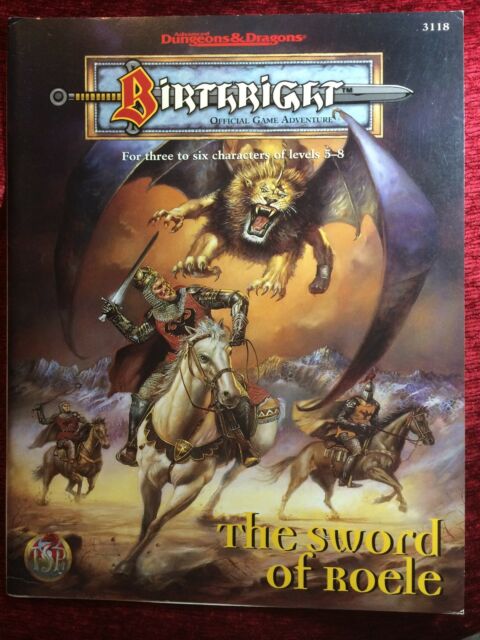
The Sword of Roele, Wolfgang Baur, 1996

This is probably one of the most obscure adventure of 2E D&D. It was written for Birthright, a fantasy setting heavily inspired by Tolkien’s Middle-Earth (with a dose of Highlander soul-stealing in the mix) and purportedly the least popular of the many settings there was at the time. Birthright had a unique focus on domain play; a prerequisite was that at least one player would play as a ruler, with the characters sharing responsabilities of governing, dealing with the many problems arising on their lands and perhaps going to war with neighboring territories. The mechanistic part of the domain play was a bit of a mess but fascinating at the same time, or at least it was for teenager me.

The Birthright line had many books but most of them were player-facing domain splatbooks, with only a handful of adventures ever made. The sword of Roele is one of those few.

And boy if it’s a weird one…

Adventure Intro:

  • The Chimera, a powerful immortal being, tries to coerce the player characters, mostly with thin-veiled threats or open war if needed, and promises of riches too, in helping to defeat her most bothersome ennemies, the Three Brothers, audacious mages that are continually encroaching on her territory and sources of magic
  • The Three Brothers also try to enlist the player characters with the appeal of finding the eponymous Sword of Roele, an ancient and prestigious sword (more symbolic than powerful) before the Chimera does (note that the Chimera isn’t reaaly interested in the sword, it’s just a way to entice the player characters). It’s all a lie, the Sword of Roele is in fact kept far away in one of the Gorgon’s treasury (the Gorgon is the Big Bad of the setting). What the Three Brothers really want is access to the Gate to Heavens (!) hidden somewhere in the Chimera’s lands in an ancient tomb, so that they could somehow skip their earthly existences and become divine beings or some such. They want the player characters to secure the tomb and planted rumors about the magic sword to confuse the Chimera (and would-be DMs too).

So, two rival factions trying to recruit the player characters to their cause, one evil, one non-evil but self-serving and dishonest about its true motives. Not a bad hook entirely, I think.

Except, there’s also:
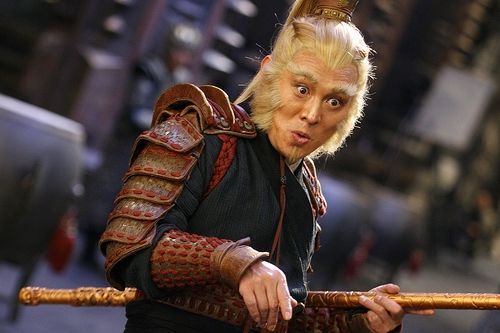
  • The Monkey King (the chinese Monkey King? yes, the same) , an Animal Lord (?) who knows all about the Three Brothers and the Chimera because he was spying on them for some reason. He wants access to the Gate of Beastland (of course he does) to return home. Where’s the Gate? In the same aformentionned tomb, with the other gate! He also wants to mess with the Chimera so that she finally gets the last little nudge towards complete madness, for the fun of it. Oh! And speaking of fun, he stole the Sword of Roele and put it right where it was claimed to be but wasn’t before! He may be the one that convince the player character to embark on the adventure as he will present himself to them in the guise of an astrologer who foretells great events and all.

Now, let me say that this whole convoluted business with the Monkey King is completely incongruous. The Chimera/Three Brothers conflict was perfectly fine by itself. I’ve nothing against the Monkey King as a character but to put him in here, in this context? Why? I also think he’s avery bad fit for the Birthright setting thematically speaking.

That said, regardless of which faction convince the player characters to act, the next phase of the adventure will happen inside the Chimera’s domain.

They may choose to fight marauding gnolls that have been causing troubles in the region lately, in which case even if they brought their armies (a real possibily in Birthright), the number of gnolls will just match the number of soldiers they have. Sigh. But anyway, this part is just a sideshow.

aside: the adventure kind of forget about the possible players’s armies after that, too cumbersome?

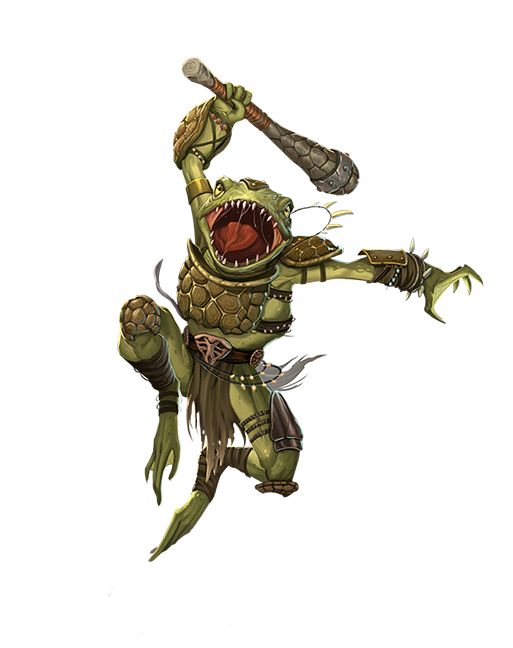
What they’ll really have to do to advance in the adventure, after having some random encounters and passing through the territory of the « Lizard King » and his lizardmen, is going into the Cryprus Valley and find one specific tower of one of the Three Brothers and either speak with him or maybe kill him and his brothers (if they chose to work for the Chimera, nice to have the choice) and they’ll obtain the location of the Tomb of the Order of the Sun. This section could be accomplished really fast, depending on where the PCs land in the region, if they speak to NPCs and what the DM throws at them.

Whilst in the valley, the PCs will also encounter Jamila the bird maiden and her tribe of carnivorous apes. A bit of an odd NPC but if the adventurers agree to give a (subtantial) amount of meat to her apes, she’ll cast a divination spell that points to a « tower of the eye » (not to confuse with three other towers that they’ll come across…) and « speak to the stones ». Armed with this knowledge, the PCs will then go at the tomb site.

Around the Tomb

However, the entrance is hidden and as designed there’s two ways to find it. One is to go at the ruined temple in the vicinity and there the PCs will come upon the ghost of the good-aligned high priest of the Order of the Sun who will immediately try to possess one character to get inside the tomb. His goal is to accomplish the last rites he never had time to do properly on the corpse of a hero-knight. If the adventurers manage somehow to convince the ghost of their good will, they could gain an invaluable ally that knows a lot about the tomb (albeit one that wouldn’t tolerate tomb-robbing). Tricky, tricky.

The other way, also a complicated one, is to spot the aforementionned « tower of the eye » and, crossing the bridge leading to it, they’ll see Kengri the « petrified sleeping giant ». With a transmute rock to flesh or dispel magic, the adventurers would then have to convince the giant (he’s been put there to guard againts tomb-defilers the text says) to reveal to them the entrance of the tomb. What would help to convince him (the text also says) is the PCs to say that they’ll help the ghost of the high-priest to get in… Phew…

I think that my players (my sister in particular) would just let possess one underling to find the entrance and then to hell with the ghost… So not an impossible situation for savvy players but wow, if this adventure isn’t overly complicated in all the wrong places.

Next, the pièce de résistance, the dungeon/tomb!

Gods Ghost and Men in Melanesia – extract IV

Here’s a ghost with gigantic testicles and a nature spirit with an extremely long leg that he uses to trip people. One could make an incredible bestiary from this book, I’m telling you.

Spells involving the name of the ghost to be called are recited as ginger is chewed. The ginger is next spat on to an object, and the spirit then comes and resides invisibly in this object. The invisible ghost is thus induced to inhabit a bracelet, knife, or a piece of ceremonial paraphernalia for an indefinite period.

___________

The names of some of these spirit forms are translatable or have obvious derivations. Thus the balepa (from a word meaning « wrapped bundle ») is a corpse which flies over the villages wrapped in burial mat. The tarogolo (from a verb meaning « to change form ») impersonates the living and kills human victims by various horrible methods including intercourse made lethal by obsidian blades in the genitals of the spirit. Only two types are limited to one sex. One of these is the bleeding women who have died in childbirth and are known as pigobara (pigo, « to give birth »; bara, « badly »). The other is the leader of the ghosts distinguished by his gigantic testicles and called putuperereko (putu, « scrotum »). The names of other special types have no known translations and appear to be simple class denominations. The visu flies at night, shines with a great light, and gouges out people’s eyes with long fingernails. The savei, which also lights up, and the tausogolo are wild, shy forms inhabiting the forest and seldom seen close at hand.

___________

A special category consist of disease-bearing spirits called taua-la-ilea (« taua of sickness »). These usually appear as gigantic, multi-coloured, four-footed animals like dogs or pigs, though they are also said to take human form. There is such a spirit which is afflicted with and spreads abroad each of a large variety of illnesses. They may appear in groups, coughing and groaning as they come, bringing epidemics to human villages.

___________

The most important powers which this god [Sumua] has exercised over human fortunes have been his control over the food supply and over the volcanic energy of Mt Pago. He has the ability to cause famine or plenty by controlling the growth of taro.

___________

As was the case with the specific forms of ghost outlined earlier, among the bush spirits some of the type names have more or less clear derivations, For example, two forms of mischievous long-haired dwarf, known as pii and tuu respectively, are said to be named for their vocal cries. The suguala (sugu-a, « to push forward, extend ») is a prankster which shoots one extremely long leg out across paths to trip people. The viri (viri-a, « to twist ») is a stunted being distinguished by twisted limbs which it owes to an arthritis-like illness. A form that eavesdrops on the plans of the living and then lures its victims by impersonating a friend or loved one is called the lolomaholi (lolo-a, « to hear, overhear »). The matea lights up at night but seldom injures men. The buata and a number of similar monsters are giant ogres or ogresses equipped with great tusks and renowned as man-eaters.

Several of the dwarfed forms are the least offensive or frightening of the bush spirits. Both the pii and another pygmy type called the patuki constitute exceptions to the general rule that men do not seek contact with such beings. There are several stories of people capturing these little spirits, taming them, training them to be useful workers, keeping them as playmates for human children, and sometimes becoming quite fond of them. It is one more instance of the incompatibility of human and spirit natures that these captivities always seem to end with the dwarfs escpaing to the bush once more.

Vampire- Dark Ages – Return to Badajoz pt 3

I’m rather happy how the session turned out all in all. There’s some weaker parts for sure, but mainly because I had decided to condense a lot of things in one week-end that could have warranted an entire session each. I’d figured, if we were doing this once a year or so, no need to slowplay it. Also, I was rusty rulewise but vampire (white wolf) has a very forgiving system (it has been said that its lack of clarity is also its weakness) and so, it could have been worse.

Player Characters (PCs)

  • Harold Necros (Ben), 7th generation Cappadocian ancilla, Road of Bones, contacts with the Lazarenes
  • Johan Grimes (Pascal), 7th generation Malkavian ancilla, Road of Sin, member of the Ordo Enigmatis
  • Krad McClaleen (Chris) , 7th generation Gangrel ancilla, Road of the Beast, multiple diablerie
  • Adhémar (Jason), 7th generation Kiasyd ancilla, Road of Caine, member of the Cainite Heresy

Downtime

  • A snake comes to Harold and delivers/expels a scroll, it’s written in old aramaic. With some research at the University of Lisbon and the help of his Hand of the Humble Scribe (the severed and preserved hand he found at Merìda), He successfully decrypt the message. It’s from a group of outcast cappadocians based in Egypt named the Lazarenes (after their enigmatic leader Lazarus). Harold accepts their invitation and go to Egypt where he’ll stay for 12 years.
  • Rodrigo (lasombra), a neonate but less of a fool than his sire Vicente, will be the PCs’ contact in Oviedo, as part of the Silver Road’s commercial cooperation.
  • The Jardines de la Galera, a place where criminals condemned to death can have a brief respite before leaving this world, serves as a feeding ground for Badajoz’s vampires.
  • Prince Johan (Juan Grimeso), sponsors an orphanage to serve as his own feeding ground. Evil!
  • Anastasio of Pampalona, a fellow malkavian, asks Prince Johan to stay in his city for a while. He wants to find and study some esoteric arab texts in the area.
  • Harold comes back from Egypt, all he says is that he laid down in the sands and learned quite a few interesting things.
  • Pretty much at the same time of the return of Harold (can’t be a coincidence, can it?), the Black Plague strikes the Iberian peninsula, causing immense suffering among the population.
  • The PCs learn that Prince Macario has been ousted in Lisbon and has left for the city of Coimbra further north. They soon learn that the new Prince, Calypsia of the toreador clan, doesn’t have them in good esteem…

Portuguese Attack

The year is 1336, war is unleashed upon the land! The Portuguese have crossed the border (and the river) and are preparing to assault both Badajoz istelf and Barcarrota castle not far south. Envoys are sent to ask for help and the city have its gates closed. The PCs quickly learn of the irrititating presence of dominican Inquisitors within the enemy’s camp, limiting their actions (i.e. slaughtering an entire army) less they attract undue attention to themselves.

Badajoz is besieged. The city is heavily fortified, with one side against the river, it cannot be easily taken but still, the meagre castillan garnison and militia will be hard pressed resisting the portuguere assault for a long time.

The PCs have a plan, cutting off the snake’s head so to speak. Krad will to try to kill Prince Calypsia of Lisbon, the one who controls these events from behind the scene. Krad is the only one of the group who can reach Lisbon fast enough (in bat form) and not worry during the day of being disturbed by marauding soldiers. Fortunately for Krad, Prince Viriath of Cacerès will join him as he knows he would be the next target if Badajoz falls.

The two gangrels fly to Lisbon and reach Calypsia’s tower. The prince is surrounded by her court and Krad and Viriath immediately fall prey to her powerful presence. She laughs haughtily at them, she will have her revenge for the death of her grand-childer Baldomar! She compels the two gangrels to fight to the death! Viriath wounds Krad severely with his claws but the latter willingly enters frenzy to break the enchantment put upon him and jumps on Calypsia with a supreme effort of will. He manages to wound her but her bodyguards put hard steel into Krad’s body, downing him. Viriath, who also recovered his senses with the attack on the prince, seizes Krad and jumps off the tower into the night. The commando mission is a failure…

But in a incredible turn of events a Sevillan messenger announces the arrival of a large moroccan fleet landing an army in the South with the aim of attacking the christian kingdoms! The Portuguese abandon the sieges and, with the soon-to arrive Castillan army, that had been previously levied to defend against them, they go together fight the invaders. The Moroccans were defeated and Badajoz was saved.

Note: the siege of Badajoz, the Moroccan invasion and the subsequent alliance of Portugal and Castille were all historical events. I had a hard time following these events and still trying to let the players have their own agency.

Downtime

  • A few weeks later, the war ends
  • The PCs confront Inês the lassombra on her role vis-à-vis the recent events, she begs for mercy and is allowed to stay
  • Anastasio the malkavian is slain by Inquisitors
  • His thaumaturgical studies are picked up by Johan, who will add them to his repertoire
  • Prince Johan is attacked by Inquisitors but is saved by his companions

Chess Game: Prince Johan vs Archbishop Monçada

Prince Johan seeks counsel with Archbishop Monçada in Madrid. As is his habit the powerful lasombra gives cryptic advices through the analyses he makes in a game of chess… As Johan isn’t much of a chess player, Monçada chooses to remove his own queen and will even « guide » Johan to victory. Removing the black queen is some sort of approval to Johan’s query about his enemy Calypsia, no doubt. Monçada also makes the point of letting the king be checkmated by a bishop… Foreshadowing some important events to come.

The Black Queen

The PCs are on the loop for a Castillan attack on Portugal. Nastasio the ventrue, second-in-command to Silvester de Ruiz, the lasombra leader, leads the attack against Calypsia’s domain. After some intensive fighting, the castillan army is finally ready to besiege Lisbon. The agreed role of the PCs will be to infiltrate the city amidst the confusion and eliminate the toreador elder. The latter is no longer at her haven but they soon learn that the prince is preparing to flee aboard a ship. The PCs hurry to the port and reach the ship just before it could leave (of course!). Some of Calypsia’s minions are sent to slow down the attackers but Adhémar (in shadow form) and Harold get through while Krad and Johan deal with them. One knight in front of Krad, another grand-childer of Calypsia, is a very good swordsman and gives some difficulties to the gangrel but he ultimately succumbs to savage claw attacks. Harold is surrounded by enemies and defends himself by inflicting withering touches to whoever approach. Johan slashes at defenders with a sword that seems too big for him and provoques confusion with his dementation to many.

Meanwhile, Adhémar use obtenebration to plunge the area where Calypsia is on the ship in total darkness, and then proceed to swing his 2-handed sword at her, crippling her with a fury of attacks. She’s an elder vampire though and she heals herself back enough to make a mighty jump outside of the ship and darkness. Unfortunately for her, she’s intercepted by Krad and Johan who strike her down again. This time Krad jumps on her and plunge his fangs on her neck and add another diablerie to his résumé…

Calypsia suffers final death. Her minions lose the will to fight their implacable foes.

In the aftermath of the siege, Nastasio his installed prince of Lisbon. In Madrid, Monçada shocks the vampire world as he kills (diablerie) his sire, the elder lasombra Silvester de Ruiz.

The end.

Coming next: the Age of Conquistadores

Vampire – Dark ages – Return to Badajoz pt 2

The default date for the vampire dark ages rpg is 1212, centuries after what the historians have traditionally dubbed the dark ages period. In the same vein, the Inquisition (along with the infamous spanish variety) wasn’t set in motion until much later than the canon of VtDA. Of course we’re talking here about the World of Darkness (WoD)’s history, where real world historical events have almost always supernatural actors in the background. In such a world it seems perfectly reasonable to have an Inquisition as soon as the 13th century (and they’re kind of the good guys too, or at least vindicated in torturing and burning people?). But what I meant to say is that, as an history buff myself, I find it oddly pleasant to take real events and put a WoD stamp on it, i.e. there’s an earthquake in Seville in 1356? That’s an andalusian mages’s retaliation against the vampire shadow reconquista, et voilà!

Player Characters (PCs:

  • Harold Necros (Ben), 7th generation Cappadocian ancilla, Road of Bones, contacts with the Lazarenes
  • Johan Grimes (Pascal), 7th generation Malkavian ancilla, Road of Sin, member of the Ordo Enigmatis
  • Krad McClaleen (Chris) , 7th generation Gangrel ancilla, Road of the Beast, multiple diablerie
  • Adhémar (Jason), 7th generation Kiasyd ancilla, Road of Caine, member of the Cainite Heresy

No stone left unturned at Merìda

Reunited in Badajoz after Harold’s diplomatic tour, the PCs decided to investigate what was happening in nearby Merìda. The small town (around 5000 pop) had many impressive roman ruins. The citizens were obviously fearful and they had organized night patrols. Evading those, the PCs first went to the ancient necropolis. There they found some evidence of occupation and a well-hidden pouch of almohad coins. Inside the pouch was also a severed hand, perfectly preserved, that Harold kept for study. Leaving the necropolis. They were followed by a black cat but Johan jumped on it using obfuscate and killed the poor creature. They then went to the amphitheatre and found an entrance blocked by a huge granite slab. Krad used potence and moved it aside without a sweat.

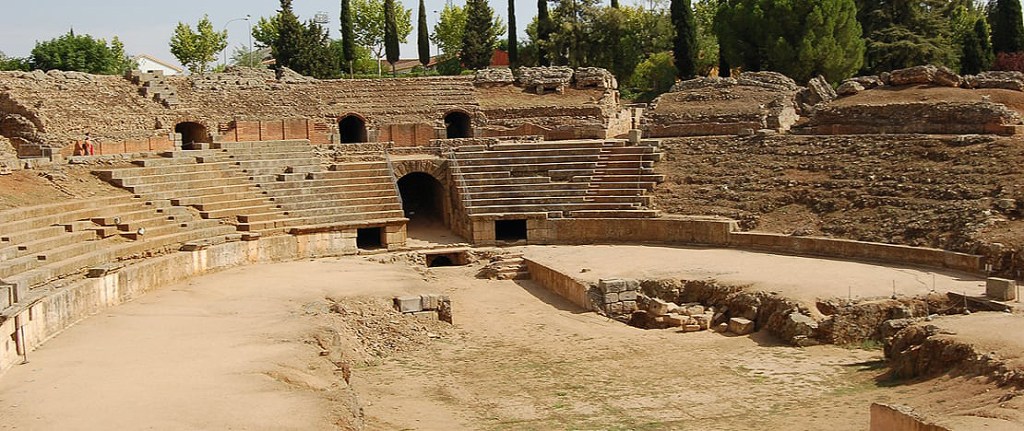
A stair led beneath the amphitheatre. Adhémar, with his heightened senses, saw a part of the stone wall that was more recent, despite the fact that it was expertly crafted to blend with the rest. Using again his supernatural strength, Krad pushed the wall down, revealing a treasure cache with andalusian coins, precious carpets, silver plates and other valuables. There was a prayer room which showed recent activity but not much else. The inhabitant(s) proved to be elusive. The next area they chose to investigate was the roman bridge, still intact after all those years.

They saw that the bridge’s arches provided perfectcly serviceable hideouts and proceeded to inspect the alcoves one by one. Krad transformed into a bat to accelerate the search but was soon swarmed by angry non-vampire ones. Krad just ignored them as they couldn’t bite through his fortitude-enhanced skin. But then, a thin figure got out of an alcove further along the bridge and jumped into the river. Oddly, use of auspex couldn’t reveal any aura in the river.The PCs tried to see if it would reemerge somewhere but at this very moment another figure, this one seriously ugly and bricked up, appeared from nowhere and attacked Johan from behind with a heavy hammer! Johan still managed to get out of the way and the mighty blow hit the pavement instead with a loud thud.

Meanwhile Krad just ignored the fight and chose to dive after the fleeing figure in the water, he saw it at the bottom, one arm stuck deep in the river bed and otherwise just being like a dessicated corpse, pushed one side by the current. Krad, tranformed back, seized the corpse with one hand but immediately felt an unholy force draining his strength away while the « corpse » (a cappadocian vampire using a mortis power) tried to push him away. Drained or not, Krad was still way stronger than his captive and kept a firm grip to bring him back to the surface.

The combat with the bricked-up figure, a nosferatu in fact, was concluded almost as soon as it started as Adhémar took two big swings of his 2-handed sword at him, struck him down and lopped his head off just like that.

The PCs wished to interrogate the vampire that Krad had fished out of the water but he proved adamant in his refusal to cooperate as they had just killed his companion. They kept him captive and brought him back to Badajoz.

Note: I had quite a different idea in mind for these two (Jakeem and Hamad) vampires of arabic descent. Those were survivors of Cordoua, in hiding in Merìda. I thought that if given the chance they would be useful allies if offered protection, Jakeem was a scholar and Hamad an architect, with the conundrum of having to, possibly, go against the wishes of a faction of christian fanatic vampires that would want them eliminated. It is true that the nosferatu attacked first, but only because they were aggressively pursued out of hiding. Without presence or dominate to help them, the two exiled vampires had caused much distress in the human population but they weren’t evil per se.

Vampire – Dark Ages – Return to Badajoz pt 1

I’ve hosted a bunch of vampire rpg sessions (both masquerade and dark ages) between 1996 and the early 2000s but it went away after that for the usual reasons (people moving away (me included), trying some other game, less time, etc.). Until now!

I think we could do this once a year, we’ll see…

Back then, I had two parallel campaigns going on, one was set in the Iberian Peninsula (the kingdoms of what is now Spain and Portugal during the Reconquista era) and the other in England, with two group of players. There was a bit of intermingling when my hometown friends or more often, my brother Jason, could come to see me. Anyway, according to my 20 years old notes – I wish they weren’t so sparse, it was fine for regular thing but not for such a long hiatus! – the last time we played the player characters were in England. Where they killed a whole bunch of people, no doubt about it.

I’ve also noted that they had a « haven » in Badajoz. What’s Badajoz? It’s a city in the Extremadura region which is part of the Kingdom of Castille. I had completly forgotten about it before googling it (and now I know a lot about this city and a lot of other things too). Last date noted was 1317 so here we go. They’ll have to go back to this particular haven, because I need a starting point and that will do. And then they can do what they want, interacting with the NPCs I present them and the events happening around.

Player Characters (PCs:

  • Harold Necros (Ben), 7th generation Cappadocian ancilla, Road of Bones, contacts with the Lazarenes
  • Johan Grimes (Pascal), 7th generation Malkavian ancilla, Road of Sin, member of the Ordo Enigmatis
  • Krad McClaleen (Chris) , 7th generation Gangrel ancilla, Road of the Beast, multiple diablerie
  • Adhémar (Jason), 7th generation Kiasyd ancilla, Road of Caine, member of the Cainite Heresy

Introduction

The almohads muslims have one last bastion in the south centered around the fortified city of Granada, officially at peace and a vassal of the crown of Castille. Tensions and wars are more often between competing christian kingdoms, the reconquista has slowed down.

World of Darkness: The Iberian peninsula has a younger vampire population than most places in Europe. If there is some visigothic or even roman and phoenician elders still around, the vast majority is newly established. Clan Lasombra is by far the most powerful, the war of princes has led to the preeminence of the dark magisters in this region. Among them, Silvester de Ruiz, in Madrid, is the current leader, but his childer, the Archbishop Monçada is rising fast and may eclipse him before long…

Re-claiming Badajoz:

  • Year 1319- The PCs booked a passage from England to Spain. Their contact was a portuguese vampire based in Lisbon named Vicente de Cardona (lasombra).
  • Vicente’s agents tried to sneak a blood bond into the voyage’s refreshment. It mostly failed though Johan felt they should not so hastily accuse generous Vicente of such a misdeed.
  • The PCs arrived in Lisbon where they met with Prince Macario (brujah). They also met Vicente in person (he’s a fool) and expressed their displeasure and imposed on him their own blood bond and essentially cowed him and made him their pawn.
  • They left Lisbon and went East and reached their destination a week later or so, the city of Badajoz in Spain, just across the portuguese border.
  • Adhémar still had his villa to accomodate them but they soon learned that the city proper was now claimed by a certain Prince Baldomar of the toreador clan. At the Jardines de la galera, the Prince made it clear that they weren’t particularly welcomed. Things got sour very fast when following a verbal joust, Johan countered a presence with a dementation power, confusing the toreador for an hour and humiliating the newly-minted prince in the process.
  • Inês, a lasombra resident, was happy to let the PCs know that Baldomar wasn’t well entrenched in his leadership and that he hadn’t much support from the powerful of Castille (i.e the lasombra).
  • Krad challenges Baldomar to a duel, but the latter refuses saying that Krad is no knight
  • The PCs raid the Alcazaba fortress and kill Baldomar and his 2 childers (and quite a few human guards).
  • Johan Grimes the Malkavian proclaim himself Prince of Badajoz.
  • Prince Johan sends messages to Prince Roque of Pampalona (malkavian) and Prince Macario of Lisbon (brujah) to let them know of his claim to princedom. He sends Harold and Inês, with Krad for protection, on a diplomatic tour while he and Adhémar take control of the city’s agents and ressources.

Ambassador Harold, Prince Johan

  • Harold & cie make a quick stop to nearby Merìda. They find the mood of the town to be fearful. Something is off but they can’t find what without an investigation.
  • Prince Johan receives an ambiguous reply from Prince Macario of Lisbon who wishes him well but also tells him that he can’t garantee that the Portuguese armies won’t cross the border in the future.
  • Harold & cie are in Caceres where they meet Prince Viriath (gangrel). He expresses his displeasure at the aggressiveness of his new neighbours (the PCs) and also insist that his domain is neutral in the peninsula’s politics.
  • Nina, an apostle of the Third Caine, does some proselytism in Badajoz but she’s met with a could shoulder (the PCs later learn that she was also spying for a portuguese vampire)
  • Harold & cie are in Toledo where they meet with Elieser de Polanco (lasombra), an erstwhile ally who seems focused on rekindling the war against Granada in Al-Andalus.
  • They also meet with with Jorge Crespo (nosferatu) who informs them on an actual who’s who among the iberian vampires in exchange for a future favor.
  • Harold & cie are in Madrid, the influent Silvester de Ruiz doesn’t have time for them but they meet with his seneschal Nastasio (ventrue) who tells them that the lasombra clan will acknowledge Prince Johan if he accepts to let them have Badajoz’s mayor under their control. This deal won’t happen.
  • They also meet with Archbishop Monçada:

And a game of Chess

  • Monçada challenges Harold to a game of chess. Harold with the white pieces. White establishes a cautious control of the center while black advances from the sides (Monçada comments: don’t attack where your opponent is strong). White’s position begins to crumble under Black’s pressure and decide to sacrifice a piece in order to gain a tactical advantage (Monçada comments: sacrifice is good, foolhardiness is not). Black accepts a lesser position but gains the advantage of pieces quality and proceed to slowly grind white with his pawns and ultimately wins the game (Monçada comments: be patient, use your advantages and wait for your foes to make a mistake).

Gods Ghosts and Men in Melanesia – extract III

Another tribe, another researcher, this part is particularly packed with gameable content! Also, kilyakai sounds great for a monster’s name don’t you think?

(The Kyaka of the Western Highlands, R.N.H. Bulmer)

Traditional Kyaka cosmology includes the following categories of spirit-beings, here listed in approximate order of significance in their influence on the affairs of living men: ghosts of the recent dead (semangko), nature demons (kilyakai), the Fertility Goddess (Enda Semangko), ancestral ghosts (semangko) who are generally equated with forest spirits (epalirai), sky beings (yakirai), Komba Ralingki, the « stranger ghost » whose bone is the object of a fertility cult performed by one Kyaka great-clan, a female forest spirit (Yama Enda), cannibal ogres (kewannambo), and minor nature spirits or semi-supernatural animals beings, including tree spirits, echoes and snails. Certain birds and animals are believed to have special properties and their killing, handling and consumption either are restricted or involve restrictions on persons performing those actions.

_____

The Kyaka have no traditional beliefs in a creator deity. Nor do they personify the sun and the moon or the forces of anture, except the rainbow (pwiya), which is believed to be a great serpent in the forest. With the exception of the sky beings, the non-human spirit-beings are only of local significance.

The most important are the kilyakai, nature demons who live in and around streams. These small and ugly creatures are entirely malicious. They steal and injure pigs, shoot with arrows men who enter their water-side preserves, so as to cause malaria, and steal babies from net-bags, left unattended, substituting their own horrid offspring who grow into half-wits, deaf-mutes and other monstrosities.

_____

Sky beings (yakirai) are believed to be responsible for storms and thunder and lightning, and to kill men, if the ghosts remove their protection. They are not conceived as ghosts or ancestors.

_____

Less important in the Kyaka cosmology are puck-like tree spirits (ningkyapen), echo spirits (palinda), and snails (kyanggaroli, yama), whose bite is believed to cause serious sickness.

_____

Cannibal ogres (kewanambo) figure in Kyaka folklore but are not met in everyday life, though Europeans were once placed in this category.

_____

Eastern Kyaka also believe in the Yama Enda (Sickness Woman) a female spirit of the forest who appears to lone men as a beautiful female woman, and seduces and kills them. She is generally thought to be a Metlpa spirit, with special power over forest game.

_____

Most magic consists of spells with associated rites known jointly as pipu or nimungka. Divining techniques, except that by a spirit medium, also fall under this heading. Most pipu also involve paraphernalia, such as leaves and stones and twigs and pianted arrows in techniques to banish water demons, coleas juice and pork fat on skewers to cure « poisoning », ashes rubbed on pigs to make them grow fat, special powders and leaves in love magic, and special stones greased and rubbed on the skin to bring luck.

_____

The sorcery stones which are waved are highly valued; they are small prehistoric figurines or club-heads or natural stones of curious shapes. Before use a pig is sacrificed and the stone smeared with its blood and grease, and invocations (nimungka) made over it. The sorcerer mounts the stone on a stick or quill and, from a place of concealment, waves it in the direction of his victim.

_____

It is significant that Kyaka nature demons (kilyakai) are specifically associated with watercourses, which are the most hazardous feature of the natural environement and take a frequent toll of human life, and with the lowlying bush and garden areas on river banks, where malarial and other infections are commonly encountered. The forest, in contrast, is tought by Kyaka only to be dangerous to persons unfamiliar with it. It is appropriate that forest spirits are not kilyakai but epali rai, ancestral ghosts, who on the whole protect the interests of the legitimate owners of the bush and menace intruders.

A good plan for running Tomb of Annihilation

I agree 100% with Peter’s commentary left on Merric’s Musings’ blog. Merric’s article is interesting in itself, but this commentary IMO is just spot on.

For some reason comments are closed on the article, can’t ask your permission – hope you don’t mind Peter.

  1. Peter

  1. I ran both campaigns… and yes, SKT was easier to setup. But I still liked ToA more.The main problem is the unstructured textwalls of Wizard’s campaigns, where they hide important pieces in cluttered texts full of irrelevant background information and fluff. It took my quite a while to make sense of ToA, but it worked very well:

  1. 1. Let the players travel to or return to Chult for their own reasons
    2. Let them to some work in Port Nyanzaru for the merchant princes, play their rivalries, and go on some jungle expeditions
    3. Disperse rumors and relicts about Omu, the Trickster Gods, the Yuan-Ti and Ras Nsi
    4. Show the Red Wizards arriving in the Port, preparing a big expedition, maybe rumors of a lost city
    5. Start the main Death Curse plot via one of the merchant princes as the quest giver, himself being afflicted, promising half his wealth and magic items for salvation (I used the mage Wakanga)
    6. Looking for the source of the Death Curse, some people will hint at going to the oracle of Orolunga, where they find out that something evil hides in Omu.
    7. Finding Omu, using the Aarokocras from Kir Sabal or the guides or seers from Port Nyanzaru or the Lich in the Heart of Ubtao
    8. Enter Omu and Stage 2 of the adventure, I would recommend level 5-6 for competent parties and the actual Tomb from level 7

Gods Ghosts and Men in Melanesia – extract II

There’s a lot of fascinating things in this book and not a few really weird beliefs being described (not the least is the ritual of penis blood-letting, where you insert [..] you put salt and then [..] okay you get the gist, ouch). But of course for the purpose of this blog I’m copying the parts that I find inspiring on a fantasy world-building perspective.

(The Kamano, Usurufa, Jate and Fore, R.M. Berndt)

Existing alongside the notion of a specific land of the dead, as well as independantly of it, is the suggestion that for an undefined period after death a ghost may communicate with living kin through dreams, either voluntarily or in response to a request from the dreamer: chewing himeru bark before sleep is said to be a way of getting in touch with the dead, to seek their advice or help in personal problems.

______

The major deities are viewed as eternal and indestructible. They assume different manifestations, are called by different names, but are still essentially unchanging. Although they may be killed, this means merely that they assume another shape. The same applies to some of the partly anthropomorphic inhabitants of the bush and jungle. But ghosts and characters in the secondary myths, including giants, ogres and apparitions of several kinds, appear to be almost as vulnerable as man is himself.

(The Mae Enga of the Western Highlands, M.J Meggitt)

Among many western clans, small pools figure in ritual intended to placate ancestral ghosts. Hidden in dense forest is a pool which clan members regard as the locus of the power of the ancestors. Women and children should not approach the site, lest they fall ill, and clansmen may visit it only on ritual occasions. In some clans men believe that a huge, invisible python, representing the ancestors, dwells in the pool. which itself is invisible to outsiders. Hence, a clan victorious in war makes no attempt to utilize the pool of the defeated clan.

_____

The Mae also assume the existence of a class of anthropomorphic demons, distinct from human beings and from ghosts, that inhabit caves and waterfalls. These creatures in a sense embody the dangers and inhospitality that the Mae, who are gardeners and inept bushmen, associate with the dense forests of the high mountains. They are not connected with particular social groups but constitue a broad category whose members are not consistently differentiated in terms of functions or individual spheres of activity. The forest and everything in it comprise their estate, so that human exploitation of sylvan flora and fauna is essentially a trespass, likely to anger the demons.

Gods Ghosts and Men in Melanesia – extract I

I haven’t opened my rpgs notebooks for a few weeks now but I am in the process of reading this fascinating classic of anthropology. I’ll keep here a few interesting tidbits I want to keep record of for later use.

Introduction (P. Lawrence, M.J Meggitt)

Spirit-beings fall into three categories. First, there are autonomous spirit-beings such as deities and culture heroes. Some deities are both creative and regulative : they are thought to have been responsible for the whole or parts of the cosmic order, still to live in or near human society, and still to intervene in its concerns. Others are only regulative: they are attributed no real creative role but are said to be important in human affairs. Culture heroes are only creative: after establishing the cosmos, they left human society and took no further interest in it. Second, there are autonomous spirit-beings who have no creative or regulative functions: tricksters, demons, and pucks who wantonly cause annoyance or harm. Third, there are the dead, who can be subdivided into the recent dead (ghosts or spirits of the dead), and the remote dead (ancestors, ancestral spirits, or ancestral ghosts). Totems belong to either of two categories: first, putative totemic forebears of named unilineal descent groups; and totems from which no descent is claimed but which named descent groups adopt as heraldic badges or emblems because of supposed association with them in the past.

(The Huli of the Southern Highlands, R.M Glasse)

The founding ancestors, both male and female, are rather aloof from human affairs. People regard them more as deities than as human ghosts, and refer to them loosely as dama. Specifically they call them dama agali duo, « half deity-half-ghost ». Thus, conceptually, the ancient ancestral ghosts are intermediate between the deities and the recent ghosts have the power to dissuade the deities from assaulting their descendants.

__

The Huli conceive the dama to be invisible deities possessing supra-physical powers. Dama control the weather, causing too much rain or too little. They attack humans, sometimes capriciously, causing sickness, infertility or death. At times they punish certain offences, or cause suffering at the bidding of sorcererers. Most dama are capable of causing both good and evil, but a few, such as Korimogo, are wholly malicious.

__

A number of the greater deities, such as Ni, Lindu, Hone, Dindiainyia and Helabe, are associated with stone objects owned corporately by every parish. Other major dama, such as Kepei, have several hut-like temples each of which is the centre for the rituals of a group of seldom connected with particular objects. A few of the greater deities, such as Korimogo, have no local or object associations at all, except in so far as their evil power emanates temporarily from the body of a person they have slain. The victims of Korimogo are buried with special precautions; the dead man’s fingers- and toe-nails are removed and their positions reversed to confuse the deity and thwart his attacks on people living in the vicinity.

Session 44: The Crash of the Star Princess

Un changement de rythme salutaire après 18-20 heures dans le même donjon. De retour dans leur homebase, quelques semaines s’écoulent avant qu’un évènement les amène vers une nouvelle aventure.

Personnages Joueurs (PJs)

  • (Félix) Flyzus, (level 9), Wood Elf Ranger (hunter), Outlander, n’a plus de famille ni de patrie, là pour l’aventure et se forger une nouvelle vie. Accompagné de son Dire Kakapo juvénile qu’il a sauvé.
  • (Chris) Pax Double-Poches, (level 7), Halfling Rogue (arcane trickster), Criminal, fuyant un passé criminel, a vu de ses yeux les trésors merveilleux qu’a rapporté le ranger Flyzus de sa dernìère expédition et s’est immiscé dans le groupe depuis
  • (Chris) Rufb (level 9), Half-Orc Barbarian (berserker), Mercenary Veteran; capturé par des pterafolks, seul survivant de sa bande de mercenaires, délivré par Flyzus au sommet du Firefinger
  • (Jason) Shin, (level 9) Tabaxi Fighter (arcane archer), Outlander, veut devenir le plus grand chasseur de tout les temps + Vorn, Shield Guardian
  • (Marjorie) Kalohan, (level 9) High Elf Wizard (evoker), Inheritor,  doit trouver un sort inconnu jusque là avant de pouvoir obtenir son héritage
  • (Isaac) Anfi, (level 9) Locathah Fighter (eldritch knight), Outlander, venu sur la terre ferme en passant par la Caverne-Tunnel, là pour découvrir ce nouvel environnement + Salamandre Géante

Downtime à Port castigliar

De retour (fastforwarded) à Port Castigliar après avoir dévalisé la tombe d’Iyayo, les aventuriers constatent que les choses ont beaucoup bougé en seulement 2 semaines depuis leur départ. Le village est fébrile, on peut y voir beaucoup de nouveaux visages, certains de passages pour profiter de la manne et de nombreux autres ayant choisi d’élire résidence en ce lieu. Pour ces derniers, principalement deux raisons sont en causes: la première étant les rumeurs de richesses apportés par les aventuriers depuis quelques mois et la deuxième étant les troubles politiques à Port Nyanzaru qui en incite plusieurs à fuir sous des meilleurs cieux.

Les aventuriers font quelques plans (un peu vagues) sur le développement futur de Port Castigliar, ils envisagent entre autre de mettre un maire en place pour faciliter les décisions (1).

Une agente de Jessamine vient voir les PJs pour une demande inhabituelle. Avec leur accord, Jessamine leur enverrait un arbre orangier par bateau. Un orangier et aussi, la dryade Enobleya qui lui est associé. En effet, Jessamine craint pour la sécurité de son manoir à Port Nyanzaru et tient à la mettre en sécurité. Jessamine leur devra une faveur en retour. Les PJs acceptent.

L’Événement

Ensuite, il y a Ferrill Grande-Gueule, une connaissance de Pax (du monde interlope disons) qui fait part d’une rumeur majeure en provenance de Port Nyanzaru: un rarissime et inestimable bateau-volant s’est abimé dans les jungles de Chult! L’occasion est trop bonne pour être manquée! (2) La magicienne fait l’acquisition d’un sort de Scrying et, avec le nom de la capitaine du bateau-volant, elle réussit à glaner quelques informations. Elle voit par l’entremise du sort de divination que des membres de l’équipage sont prisonniers de Pterafolks, elle voit aussi que ceux-ci font un sacrifice à en jetant un à sa mort dans la lave en contrebas. Ils apprennent ainsi que le bateau-volant (ou au moins son équipage) doit être dans une région volcanique quelque part au Sud mais c’est une région très vaste!

Kalohan a ensuite la bonne idée de contacter les Aarakocras, qui font régulièrement du commerce au village et réussit à convaincre la marchande-matriarche, moyennant une primauté commerciale à venir, d’envoyer des patrouilleurs ailés pour trouver le repaire des Pterafolks, le bateau-volant, ou les deux.

Pirates de Rivière

Le temps compte si les aventuriers veulent être les premiers à mettre la main sur le bateau-volant. Plusieurs autres groupes sont sûrement déjà en route puisque l’information est originaire de Port Nyanzaru. Les PJs partent donc avec du retard de ce côté mais en contrepartie, ils sont certainement plus proches de l’objectif. Leur plan est de remonter la rivière Olung à bord de leur bateau, la Barge Inexorable, et se diriger vers le Sud en attendant d’avoir plus d’informations avec leur alliés Aarakocras.

Au deuxième jour après avoir quitté le village, ils tombent dans une embuscade.

CrooaaaaaRaaaahaaaahhh *thump*

La rivière à cet endroit est étroite, avec des falaises chaque côté. Les surplombant, une vingtaine de Gripplis font un cri de guerre avant de s’élancer vers la barge!

Malheureusement pour les pirates de rivière, il y a une puissante magicienne à bord de la barge. Celle-ci fait un Wall of Force au-dessus d’elle, créant une barrière invisible infranchissable. La première vague de l’assaut est ainsi brisée, plusieurs Gripplis « s’étampent » brutalement contre la paroi. La prochaine vague choisit plutôt de sauter dans l’eau mais Shin, Flyzus (3) et Pax abattent des Gripplis sont prêts avec leurs arcs, décimant rapidement leur rang. Anfi en achève stratégiquement avec des Magic Missiles. Pour couronner le tout, la salamandre géante d’Anfi est déjà dans l’eau et va dévorer une paire d’hommes-grenouilles pour la peine. Un des Gripplis en haut (comme flottant dans les airs) sur le mur de force trouve le rebord en tâtonnant mais est aussitôt éliminé d’un coup de baguette de Lightning Bolt de Kalohan. À un moment donné un des gripplis se rend alors que Flyzus le vise de son arc (il met les mains dans les airs), mais le Oathbow l’a « choisit » comme ennemi, Flyzus l’abat impitoyablement. Une poignée des pirates de rivière s’échappe, le moral complètement brisé… (4)

Soldats du Roi Singe

Le lendemain, toujours sur la Barge (jamais besoin de faire de portage avec la Barge Inexorable), une secousse étrange se produit à l’arrière et un instant après le chaos se déchaîne!

Deux démons-singes apparaissent soudainement (ils étaient invisibles) et attaquent. Heureusement leurs cibles (au hasard), Rufb et Vorn sont capables d’encaisser. Les aventuriers contre-attaquent. La magicienne fait un Banishment, expédiant tout bonnement un des démons-singes là d’où il vient. L’autre se fait rapidement entouré et succombe sous les coups répétés. (5)

Le voyage sur la rivière va se poursuivre quelques jours. Sur leur chemin se trouve les Jardins de Nangalore, un site significatif dans ma campagne puisque c’est là que l’explorateur Castigliar a disparu avec ses hommes. Une sorcière, ou une démone peut-être, habite cet endroit maudit. Les aventuriers vont-ils choisir de l’explorer ou passer leur chemin? Nous verrons!

Notes du DM:

  1. Les décisions sont prises en commun par les « anciens » du village jusqu’à maintenant.
  2. c’est un événement prévu dans le « calendrier », les joueurs avaient bien sûr le loisir de l’ignorer
  3. le Oathbow de Flyzus permet de choisir un ennemi pour lui infliger plus de dommage, j’ai vu par après seulement que c’est un seul ennemi par jour, ce qui change la donne par rapport à passer d’un ennemi à l’autre constamment! J’ai une idée pour rétablir ça à un niveau acceptable…
  4. ça été un combat à la fois très facile et très amusant comme quoi ce n’est pas toujours nécessaire d’avoir du défi
  5. 2ème combat de la campagne contre des « démons-singes », les joueurs savent que ceux-ci servent le Dieu-Singe/Roi-Singe mais n’en savent pas beaucoup plus pour le moment