Humanoids of Chult – tactics and fluff

Another page fell off my Jungle D&D notebook so, again, I’ll just copy it over here. It’s a just few broad strokes to help me use humanoid encounters in my campaign in a more creative way.

Note: One particular thing I had in mind when wrting this stuff was not to fall into lazy association i.e assigning giant frogs to the frogmen gripplis or giant spiders to Araneas, etc. To some extent only, associating fishmen with water magic is just too natural to pass by.

Jungle Folks

Batiri Goblins

Themes/Fluff: adaptables, hermaphrodites, clever

Tactics/Tricks: hit & run, poison, barbed arrows, hidden lairs

Often seen with: Giant insects, insect swarms, troodons

See also: A note on batiri goblins

Gnolls

Themes/Fluff: overeating/gorging, wasteful killing, weird (Alien-like) reproducing cycle: gnoll >> demon maw >> hyena >> gnoll

Tactics/Tricks: blitzkrieg, harassing, target weaker foes, overwhelm

Often seen with: hyenas, demon maws, shoosuva, whiterlings, clawing hands

Troglodytes

Themes/Fluff: underground, disgusting, slimy, awful stench, decay

Tactics/Tricks: ambush, camouflage, attrition, acid (trap and spitting), invisible to darkvision, resistance to cold

Often seen with: subteranean lizards, rot grubs swarm, carrion crawlers, gricks, oozes, brown mold

Gripplis

Themes/Fluff: dimorphic, river pirates, harmonious village, preyed upon

Tactics/Tricks: poison, water/mud magic, Infinite Leap martial artists

Often seen with: mud mephits, mud elementals, river dragon turtles

Lizardmen

Themes/Fluff: isolationnists, non-religious, omnivores

Tactics/Tricks: necromancy, crayfish armors, firefly nocturnal signals

Often seen with: giant crabs, brine zombies, animated mangrove, salt basilisks, giant flashing fireflies

Aarakokra

Themes/Fluff: long-range traders, female leadership, open-minded, cooperative

Tactics/Tricks: spears, dive-attack, fly away from danger

Often seen with: quetzacoatlus pack animal, assassin vines to protect their villages (high above ground)

See also: A Note on Aarakokra

Pterafolks

Themes/Fluff: crude magic, Kossuth (volcano) worshipping, witch brewing, capture folks to sacrifice or experiment on

Tactics/Tricks: potions, magic wands, poisonous pollen bombs, ressitance to fire

Often seen with: Fire elementals, fire mephits, smoke quasit

See also: Pterosaurs

Jungle/Albino Dwarves

Themes/Fluff: resilience, anti-civilization, many taboos, ground huts, survivors

Tactics/Tricks: monstruous plants, magic tatoos, heat metal spell, druidic magic

Often seen with: triflowers, razorweed (around their village), Giant Chameleon, Girallon

See also: A Note on Jungle Dwarves

Kuo-Toa

Themes/Fluff: humans transformed into fishmen to survive great flood, dogmatic

Tactics/Tricks: water magic trident as spiritual weapon

Often seen with: Chuuls, Hydra

Ghouls

Themes/Fluff: minions of a powerful necromancer, can be talked to but dishonest, unscrupulous, careful

Tactics/Tricks: fell magic, patrols, archers, cursed weapons

Often seen with: undead dinosaurs, flaming skulls, deathlocks

Serpent Men

Themes/Fluff: tomb guardians, well-prepared, astute

Tactics/Tricks: flee deeper if hard-pressed, use charm magic but also susceptible to charm, positioning with traps, blindsense, use darkness spell

Often seen with: other dungeon denizens

See also: A Note on Serpent Men

Araneas

Themes/Fluff: astronomy, astrology, female superiority, village behind web walls, silk weaving, xenophobia

Tactics/Tricks: female sorceresses, male canon-fodders

Often seen with: N/A

See also: A Note on Araneas

Vegepygmies

Themes/Fluff: mold-infected batiri goblins, symbiont, different types of mold have different results

Tactics/Tricks: hit & run, ambush, use favorable terrain

Often seen with: thornys

See also: A Note on Vegepygmies

Myconids

Themes/Fluff: psychic, hive-mind, confusion

Tactics/Tricks: mind affecting spells

Often seen with: controlled creatures

See also: A Note on Myconids

Outsiders

Dwarves (Northern)

Themes/Fluff: greedy despoilers, gruff, xenophobia, use demonic magic fueled by precious stones

Tactics/Tricks:, heavy armors, crossbows

Often seen with: large pack animals, imps, summoned demons

Company of the Flaming Fist

Themes/Fluff: greedy despoilers, unscrupulous, devious, East Indian company equivalent

Tactics/Tricks: battle mages, archers, tough veterans, patrols

Often seen with: ratfolk skrimishers, ettins, tongueless harpies

Nelanthir Pirates

Themes/Fluff: pirates!

Tactics/Tricks: sea witch magic, swashbuckler captain, prefer not having to fight

Often seen with: mimic treasure chest, rogue aarakokra, blood hawks, water elemental

Lantanese Gnomes

Themes/Fluff: magitech, submarines, underwater city, artificers

Tactics/Tricks: mecha, energy beam

Often seen with: automatons

A note on Cloakers

I forgot to mention one amusing encounter with a cloaker in a recent play report. I could simply edit the post and add a paragraph but I’ve figured that I could do one of my « A note on … » article as I think it’s quirky enough.

So basically a cloaker in D&D is a manta-like intelligent predator that, as the name implies, ressemble a black cloak or a coat when it’s immobile.

The funny gimmick (for a DM anyway) is the mode of attack of this ambush monster: once a cloaker has chosen a victim it will silently glide from behind or jump unto an unsuspecting passerby that thought it just a piece of clothe or use its mind-affecting « moan » power but either way it will engulf its prey to bite it or perhaps just let it suffocate to death. Outside help is complicated by the fact that hitting the Cloaker much likely hits the engulfed victim too!

Aside: The always useful The Monsters Know What They’re Doing’s article (here) on the cloaker tactics mentions how the « suffocate » mechanic should be applied efficiently in 5E.

The first appearance of the Cloaker goes back to the 1981 Secret of the Slavers Stockade, a 40p dungeon-crawling adventure, the second part out of four of the slavers series. In it, the bad guys had some kind of understanding with this strange creature that came from far underground and it acted as a guard of sort for the slaves. Already at its origins it has all kind of funky powers to keep the players guessing!

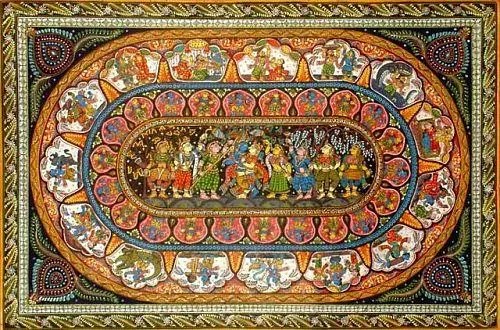
Now, my version of a cloaker that I’ve put in my game does not have the appearance of a black cloak but instead looked like an authentic ancient tapestry, with some kind of complicated art on it, hanging on a wall inside the Tomb of Iyayo.

Looks like a big mouth doesnt’ it?

The emphasis I’m doing in this case is more on the MIMIC nature of the cloaker than being an exotic manta-like underground predator that happens to look like a cloak. Tapestries, rugs, and such will always be potential cloakers in my dungeons from now on. The neat thing I think is that my players, with the past few dungeons, are used to find clues on such accessories and so the dilemna will be: will you get close to this ancient looking tapestry that may give you an important clue knowing that it may well be a cloaker? ‘Cause that’s one of the best part of D&D, the « will you mess with this »? that you throw at the players constantly!

A note on dinosaurs (in D&D)

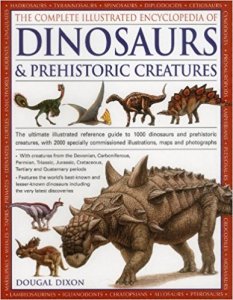
I gotta say, all this nonsense of Lost World-style D&D I’ve been doing for a year now has rekindled my childhood’s interest. Not too surprisingly, the D&D Monster Manual (where fungi creatures are classified as plants!) isn’t very accurate when it comes to dinosaurs, at the very least the section should have been called « prehistoric creatures ».

61GepsqTT7L._SX385_BO1,204,203,200_

  • Pterosaur, plesiosaur and dimetrodon are not dinosaurs at all, they belong in other clades. The latter in particular became extinct 40 millions years before the first dinosaurs and is, in fact, closer to the mammals in the evolution tree.
  • Crocodiles (crocodilians) are contemporary of the dinosaurs. Some, as the deinosuchus, a 36′ long crocodilian, easily justify the use of a giant crocodile template without any stretch of imagination.
  • Many dinosaurs lived in big herds and as such, would have lived in vast plains with big meat-eaters trailing them.
  • There’s a paleontology bias for recovering bigger fossils as big bones are more likely to be preserved than smaller ones. In all likelihood, dinosaurs occupied every possible ecological niches and diminutive (gliding, tree-climbing, insect-eating, etc.) dinosaurs were abundant.
  • Birds are feathered, flying non-extinct dinosaurs.

b2c34659a5a671591ac178bf2c3ceeb5

Dinosaurs in a fantasy world

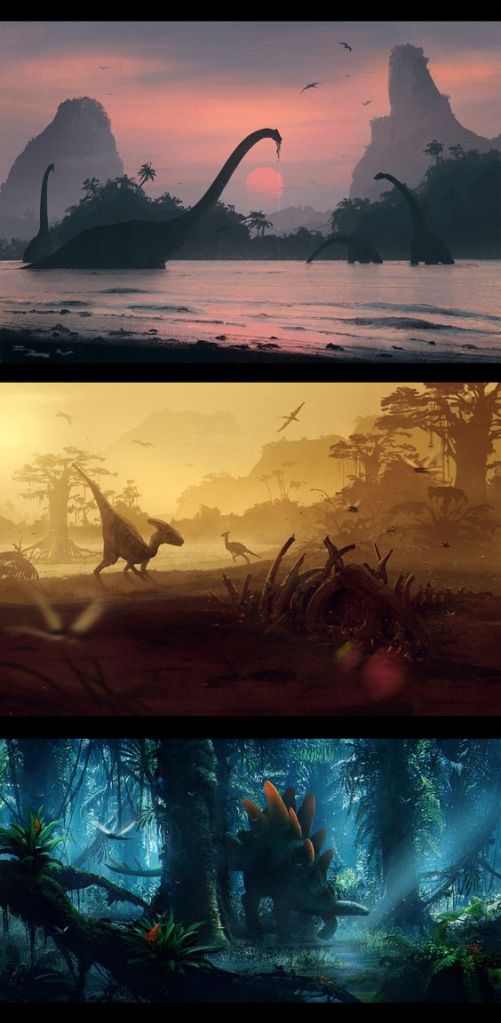
It’s all about what we accept as tropes of the genre. Dinosaurs in a vanilla fantasy setting will readily seem awkward. Dinosaurs in a Lost World-themed setting à la Isle of Dread or Chult, now, that’s far more easy to swallow. In such a place, dinosaurs should be seen as nothing more than exotic animals (or just plain animals for the locals).

I would go further, if there is dinosaurs, lets give them (most of) the place. I mean, would there be still jaguars, elephants or whatever,  if packs of deinonychus roamed the jungles?

What about monsters? In fact, one option would be to monsterize dinosaurs from time to time, to spice things up. Here’s some basic reskinning:

  • spike-throwing stegosaur (manticore tail)
  • multi-headed plesiosaur (hydra)
  • gorgoceratop (gorgon-triceratop)
  • fire-breathing T-rex (a classic)
  • displacer raptor (deinonychus-displacer beast)